

Every thriving business has one thing in common: the ability to make smart decisions quickly. Computer technology information systems make that possible. From managing daily operations to analyzing massive datasets, these systems have become the backbone of modern business strategy—and the organizations that invest in them are growing faster than those that don’t.
This post breaks down exactly how computer technology information systems fuel business growth, why they matter more than ever, and what your organization should know about building a strong technological foundation.
What Are Computer Technology Information Systems?
Computer technology information systems (CTIS) refer to the integrated set of hardware, software, data, and processes that organizations use to collect, manage, and distribute information. They span a wide range of functions—from basic data storage and communication tools to complex enterprise resource planning (ERP) platforms and business intelligence dashboards.
At their core, these systems exist to help businesses run more efficiently and make better decisions. Think of them as the nervous system of an organization: constantly gathering signals, processing input, and directing resources to where they’re needed most.
CTIS is a broad field, encompassing everything from software development and server management to system administration and network security. Each component plays a distinct role, but together they create a technology ecosystem that powers growth from the inside out.
How Do Computer Technology Information Systems Support Business Operations?
Day-to-day business operations rely heavily on information systems. Whether it’s processing customer orders, managing payroll, or tracking inventory, these systems automate tasks that would otherwise consume hours of manual effort.
Consider a mid-sized retail company. Without a robust information system, staff members would spend significant time manually updating stock levels, cross-referencing supplier invoices, and reconciling sales data. With the right CTIS in place, all of that happens automatically—and in real time. Staff can redirect their energy toward higher-value work, like building customer relationships or identifying new revenue opportunities.
The same logic applies across industries. Hospitals use information systems to manage patient records. Logistics companies use them to optimize delivery routes. Financial institutions use them to detect fraudulent transactions within milliseconds. The applications are virtually limitless, and the operational gains are measurable.
The Role of Software Development in Scaling Business Capabilities
 Not every business challenge can be solved with an off-the-shelf product. That’s where software development becomes a critical driver of growth. Custom software allows organizations to build tools tailored precisely to their workflows, customer expectations, and strategic goals. Rather than adapting processes to fit generic software, businesses can develop applications that work exactly the way they need them to. This flexibility becomes a genuine competitive advantage—especially in industries where speed and precision matter.
Software development within a CTIS framework also enables businesses to integrate disparate systems. For example, connecting a customer relationship management (CRM) platform with an accounting system eliminates data silos, reduces errors, and gives leadership a clearer view of overall performance. When systems communicate seamlessly, decision-making improves at every level of the organization.
As businesses grow, software needs to scale with them. Well-developed systems can handle increased transaction volumes, expanded user bases, and more complex reporting requirements—without grinding operations to a halt. Organizations that invest in scalable software development early rarely have to rebuild from scratch later.
Why Server Management Is Critical to Business Continuity
Behind every functioning application and database is a server—or more likely, many servers. Server management refers to the ongoing process of maintaining, monitoring, and optimizing these machines to ensure consistent performance and availability. Poor server management is an invisible risk that can have very visible consequences. Downtime costs businesses money, damages customer trust, and creates bottlenecks across every department. According to research by Gartner, the average cost of IT downtime is approximately $5,600 per minute—a figure that makes the case for proactive server management compellingly clear.
Effective server management practices include regular performance monitoring, security patching, capacity planning, and backup management. When these tasks are handled consistently, businesses can rely on their systems during peak demand periods, whether that’s a Black Friday sales surge or a high-traffic product launch.
Cloud-based server environments have also changed the way organizations approach this challenge. Platforms like Amazon Web Services (AWS), Microsoft Azure, and Google Cloud offer scalable infrastructure that adjusts dynamically based on demand. Businesses no longer need to over-provision hardware to prepare for traffic spikes—they pay for what they use and scale up instantly when needed. This shift has made enterprise-grade server management accessible to businesses of all sizes.
System Administration: The Foundation of a Reliable Technology Environment
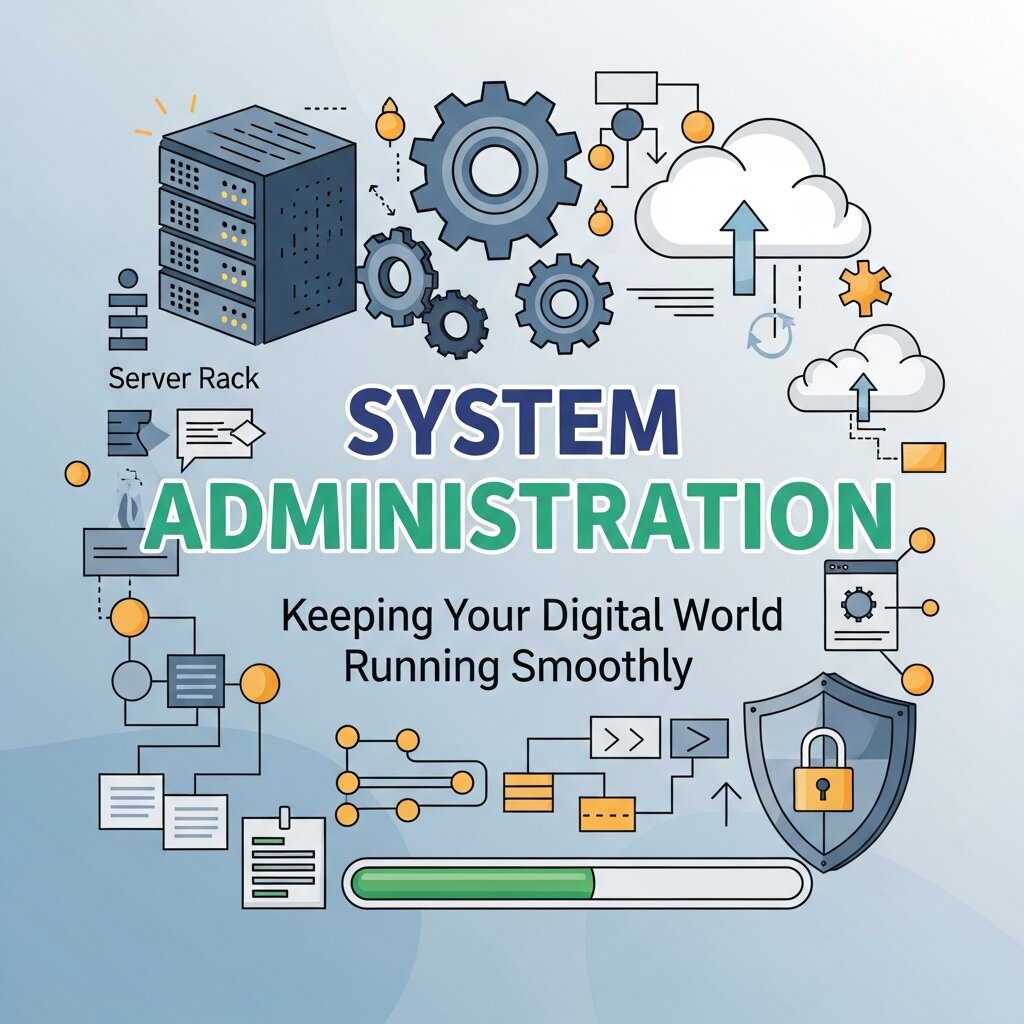 System administration is the practice of configuring, maintaining, and ensuring the reliable operation of computer systems and networks. System administrators—often called sysadmins—are the people responsible for keeping an organization’s technology environment running smoothly. Their work spans a wide range of responsibilities: installing and updating operating systems, managing user accounts and permissions, monitoring network performance, and enforcing cybersecurity policies. While sysadmins often operate behind the scenes, their impact on business productivity is enormous.
A well-administered system means employees can access the tools they need without interruption. It means sensitive data stays protected behind appropriate access controls. And it means potential issues—whether a failing hard drive or a suspicious login attempt—get caught early, before they escalate into something far more costly.
For growing businesses, system administration also plays a strategic role. As teams expand and technology stacks become more complex, sysadmins help ensure that new tools integrate cleanly with existing infrastructure. They establish naming conventions, documentation standards, and disaster recovery protocols that keep operations predictable even as the business evolves.
How CTIS Improves Data-Driven Decision Making
 One of the most powerful contributions of computer technology information systems to business growth is their ability to transform raw data into actionable insights. Businesses generate enormous volumes of data every day—sales transactions, customer interactions, website behavior, supply chain events. Without the right systems in place, most of that data goes unanalyzed. With a robust CTIS, it becomes a goldmine.
Business intelligence tools, powered by well-structured information systems, allow leaders to identify trends, forecast demand, and pinpoint inefficiencies before they become major problems. A marketing team, for instance, can analyze campaign performance data in real time and reallocate budget toward the channels delivering the highest return on investment. An operations manager can use system data to identify which part of the supply chain is creating delays and address it immediately.
Crucially, data-driven decision-making reduces reliance on intuition. Gut feelings have their place, but they can’t compete with a well-structured dataset when it comes to forecasting quarterly revenue or evaluating whether a new product line is worth pursuing. CTIS gives businesses the infrastructure to build that kind of analytical capability.
The Competitive Advantage of a Strong Technological Infrastructure
Businesses that treat computer technology information systems as a strategic asset rather than a cost center consistently outperform their competitors. There’s a clear pattern: organizations with mature IT infrastructure respond faster to market changes, serve customers more effectively, and launch new products or services with less friction.
This advantage compounds over time. A business that invests in quality software development, rigorous server management, and disciplined system administration builds a foundation that supports long-term growth. Systems improve with iteration. Teams develop expertise. Processes become more efficient as technology matures.
Conversely, organizations that underinvest in CTIS often find themselves in reactive mode—constantly fixing problems instead of pursuing opportunities. Technical debt accumulates. Legacy systems slow down new initiatives. And by the time leadership recognizes the issue, catching up becomes expensive and disruptive.
Key Considerations for Businesses Building or Upgrading Their Information Systems
For businesses looking to invest in or improve their computer technology information systems, a few principles are worth keeping front of mind.
Align technology with business goals: The best information system is one that directly supports what the organization is trying to achieve. Before purchasing software or overhauling infrastructure, start with a clear articulation of business objectives and work backward from there.
Prioritize security from the start: Cybersecurity is not an afterthought. Data breaches, ransomware attacks, and system vulnerabilities can cripple a business—and the reputational damage often outlasts the financial cost. Build security into every layer of your CTIS, from network configuration to employee access policies.
Invest in people, not just platforms: Technology is only as effective as the people using it. Training, documentation, and change management are essential components of any successful CTIS implementation. When employees understand how to use systems effectively, productivity gains multiply.
Plan for scalability: Choose systems and infrastructure that can grow with the business. Switching platforms midway through a growth phase is costly and disruptive. Whether it’s cloud-based server management solutions or modular software development frameworks, scalability should be a core criterion from the start.
Measure and iterate: Implement performance metrics for your technology systems and review them regularly. Uptime, response times, user adoption rates, and data accuracy are all indicators of how well your CTIS is performing—and where there’s room for improvement.
Frequently Asked Questions About Computer Technology Information Systems
What are computer technology information systems?
Computer technology information systems are integrated systems of hardware, software, data, networks, and processes that help businesses collect, manage, process, and distribute information efficiently.
Why are computer technology information systems important for businesses?
They improve operational efficiency, support faster decision-making, reduce manual work, strengthen data management, and help businesses scale their operations while maintaining productivity and consistency.
How does software development support CTIS?
Software development enables businesses to create customized applications that match their specific workflows and requirements. It can also connect different business systems, reduce data silos, and support long-term scalability.
What role does server management play in business operations?
Server management helps maintain system performance, availability, security, and reliability. Regular monitoring, updates, backups, and capacity planning can reduce downtime and help businesses maintain continuous operations.
Why is system administration important?
System administration keeps computer systems, networks, user accounts, permissions, and security configurations functioning properly. Effective administration helps employees access the resources they need while reducing technical disruptions.
How do information systems improve decision-making?
Information systems collect and organize business data so leaders can analyze trends, measure performance, identify inefficiencies, and make decisions based on reliable information rather than assumptions alone.
Can small businesses benefit from CTIS?
Yes. Small businesses can use information systems to automate repetitive tasks, manage customer and financial data, improve collaboration, monitor performance, and build infrastructure that can support future growth.
How can businesses make their information systems more secure?
Businesses should prioritize cybersecurity through strong access controls, regular software updates, secure network configurations, employee training, data backups, monitoring, and appropriate security policies.
What should businesses consider when choosing an information system?
Businesses should evaluate their goals, scalability requirements, security needs, integration capabilities, usability, costs, support requirements, and expected return on investment before selecting a system.
How do CTIS contribute to long-term business growth?
CTIS creates a technological foundation that supports automation, data-driven decisions, efficient operations, customer service, and scalability. When technology is aligned with business goals, it can become a long-term competitive advantage.
Building the Business Case for Computer Technology Information Systems
Growth doesn’t happen by accident. Behind every business that scales successfully is a set of systems, processes, and people working in concert to make it possible. Computer technology information systems provide the infrastructure that holds all of that together.
From software development that creates custom competitive advantages, to server management that protects business continuity, to system administration that keeps day-to-day operations running smoothly—every element of CTIS contributes to an organization’s ability to grow confidently and sustainably. The organizations best positioned for future growth are those treating technology investment not as a line item to minimize, but as a strategic lever to pull. The question isn’t whether to invest in computer technology information systems. The question is how quickly you can build the capability to use them well.



Leave a Reply