

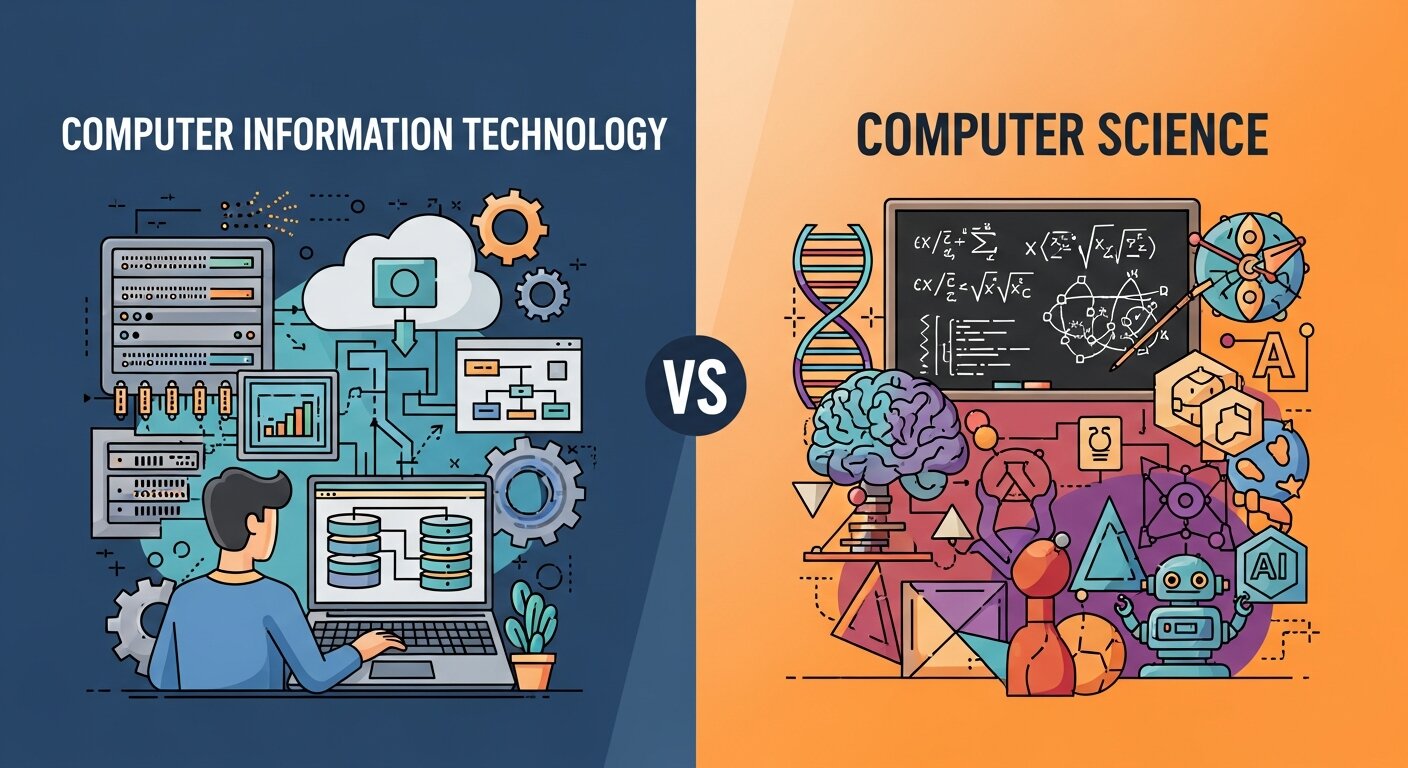
Choosing a career in the tech industry often starts with a major educational decision. Two of the most popular paths sound similar but lead to entirely different professional lives. Students and career changers frequently find themselves stuck trying to understand the exact differences between these fields.
Making the wrong choice can mean spending years studying subjects that do not align with your actual career goals. You might end up deep in complex mathematical algorithms when you really wanted to build physical network infrastructures. Alternatively, you might find yourself troubleshooting software installations when your true passion lies in developing mobile applications from scratch.
This guide breaks down the debate of computer information technology vs computer science. We will explore the core focus of each discipline, look at the specific classes you can expect to take, and outline the day-to-day realities of jobs in both fields. By the end of this article, you will have a clear understanding of which educational path matches your personal strengths and professional ambitions.
What is Computer Science?
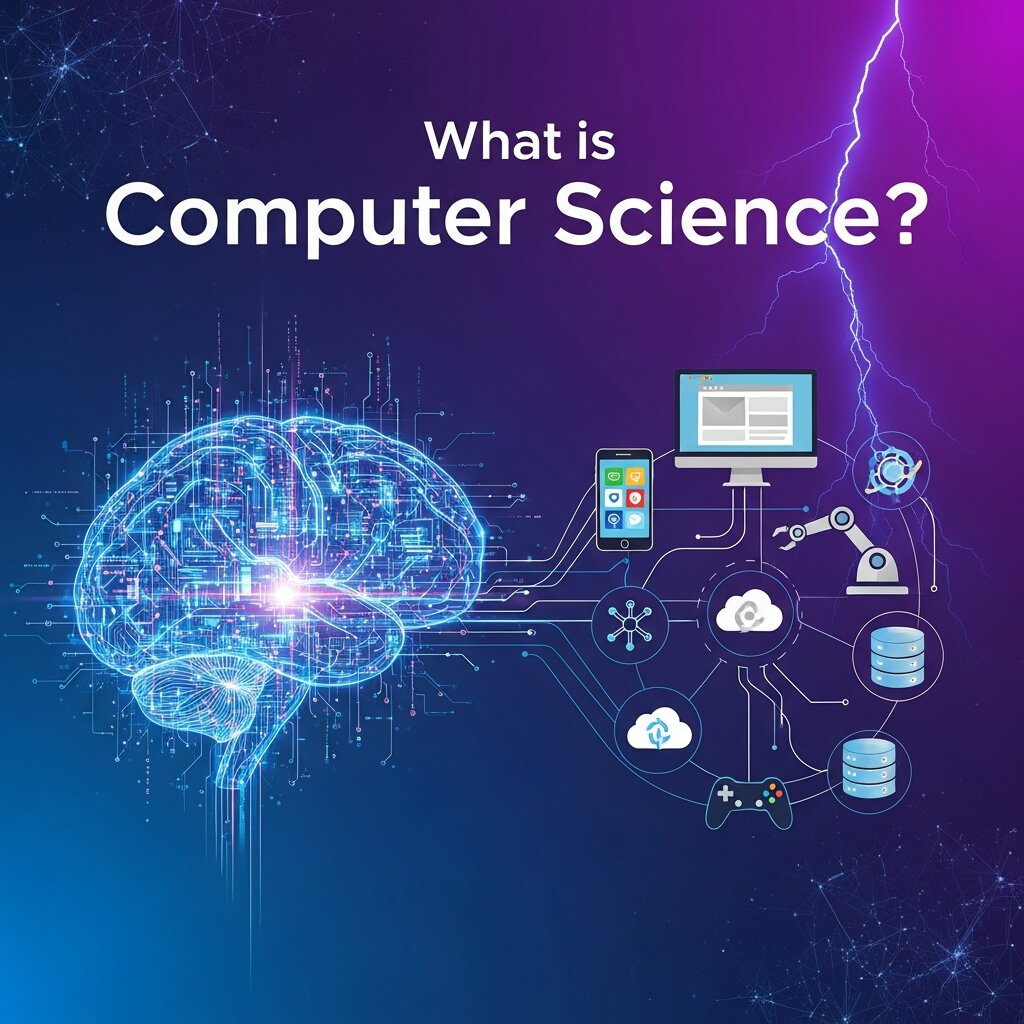 Computer science is the study of computers and computational systems. It focuses heavily on software and software systems, including their theory, design, development, and application. People who study this field learn how to communicate directly with computers using various programming languages.
Core Concepts and Theories
At its heart, computer science is about problem-solving. Students learn how to write algorithms to complete specific tasks efficiently. The curriculum leans heavily on advanced mathematics, including calculus, discrete math, and linear algebra. You will study data structures, learning how to organize and store data so it can be accessed and modified effectively.
Another major component is computational theory. This involves understanding what a computer can and cannot do. You learn the fundamental limitations of algorithms and processing power. Software engineering principles are also heavily emphasized, teaching students how to design secure, scalable, and maintainable software programs.
Typical Career Paths in Computer Science
Graduates with a computer science degree typically build new software technologies. They are the creators of the tech world.
Software engineers write the code for operating systems, mobile applications, and video games. Data scientists use advanced programming to extract meaningful insights from massive sets of data. Machine learning engineers build artificial intelligence systems that learn and adapt over time. Database administrators design the architecture that safely stores a company’s most valuable digital assets.
These roles require deep focus, extensive coding knowledge, and the ability to work on complex, long-term development projects.
What is Computer Information Technology?
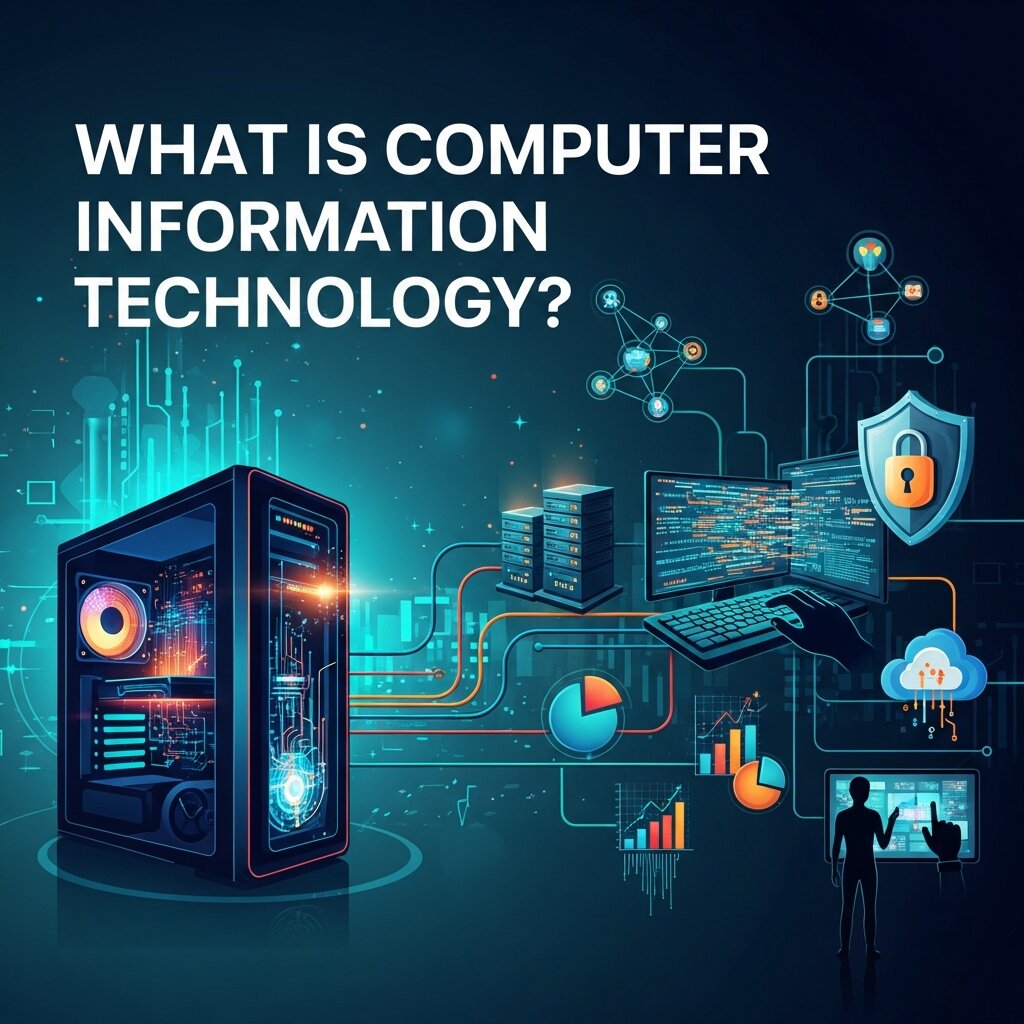 Computer information technology focuses on the practical application of computers and telecommunications equipment to store, retrieve, transmit, and manipulate data. Instead of focusing on creating new software, this field centers on selecting, managing, and maintaining the technology that businesses use every day.
Practical Application and Infrastructure
The study of computer information technology is highly practical. It deals with the everyday operational needs of an organization. Students learn how to build and maintain computer networks, manage databases, and ensure cybersecurity protocols are actively protecting company data.
While some coding is required, it is usually focused on scripting for automation rather than building entire software applications. The curriculum emphasizes understanding hardware components, operating systems, and network architecture. You learn how different technology systems interact and how to configure them to help a business run smoothly and efficiently.
Typical Career Paths in IT
Professionals in computer information technology keep businesses connected and secure. They are the implementers and maintainers of the tech world.
Network administrators oversee an organization’s computer networks, ensuring internet connectivity and internal communication systems remain online. Cybersecurity analysts monitor networks for security breaches and investigate network violations. Systems analysts evaluate a company’s current computer systems and recommend upgrades to improve efficiency. IT support specialists provide direct help to employees experiencing hardware or software issues.
These jobs often require strong communication skills, quick problem-solving abilities, and a hands-on approach to hardware and software troubleshooting.
Computer Information Technology vs Computer Science: Key Differences
Understanding the computer information technology vs computer science dynamic requires looking at several distinct categories. The differences span from what you learn in the classroom to how much you earn in the workforce.
Educational Requirements and Curriculum
The coursework for computer science is deeply analytical. Expect a heavy load of mathematics and theoretical computing. You will take classes in artificial intelligence, computer architecture, cryptography, and multiple programming languages like Python, Java, and C++. The academic journey is rigorous and requires a strong aptitude for abstract logic.
A degree in computer information technology is much more applied. The math requirements are usually less intense. Instead of calculus and computational theory, your classes will cover network administration, information security, project management, and database management. You learn how to take existing technology and apply it to solve real business problems.
Day-to-Day Responsibilities
A computer scientist typically spends their day writing, testing, and debugging code. The work is highly focused and often independent, though you will collaborate with other developers. Your main goal is to build something new or significantly improve the underlying code of an existing program. The timelines for projects are usually measured in weeks or months.
An IT professional spends their day interacting with various hardware systems, software configurations, and human end-users. The work is dynamic and often reactive. You might start your day setting up servers, move on to patching a security vulnerability, and end the day helping a department transition to a new cloud storage system. The timelines are often immediate, dealing with daily operational hurdles.
Salary Expectations and Job Outlook
Both fields offer excellent compensation and strong job security. Technology is essential to modern business, meaning professionals in both areas remain in high demand.
Computer science roles tend to have a slightly higher starting salary. The specialized skills required to engineer software and develop artificial intelligence command premium compensation. Software developers and machine learning engineers frequently see six-figure salaries early in their careers.
Computer information technology roles also pay very well, particularly as you move into management or specialized cybersecurity positions. IT managers and information security analysts earn highly competitive salaries, and the barrier to entry for junior IT roles can sometimes be lower than in software engineering.
Skills You Need to Succeed in Each Field
Success in computer science and information technology depends on different skill sets. Computer science requires strong analytical thinking, problem-solving ability, and a deep understanding of logic and mathematics. You must be comfortable writing code, debugging complex programs, and learning new programming languages regularly. On the other hand, information technology emphasizes practical and technical skills. You need to understand hardware, networking, operating systems, and cybersecurity basics. Communication is also crucial in IT because you often work directly with users and teams. While both fields require adaptability, computer science leans toward abstract thinking, whereas IT focuses on real-world problem-solving and system management in fast-paced environments.
Certifications That Boost Your Career
Certifications can significantly enhance your career in both computer science and IT. In the IT field, certifications like CompTIA A+, Network+, Security+, and Cisco’s CCNA are highly valued. They demonstrate your practical knowledge and make you job-ready even without extensive experience. In computer science, certifications are less mandatory but still useful. Cloud certifications like AWS Certified Developer or Google Cloud certifications can boost your profile. Additionally, specialized certifications in data science, machine learning, or cybersecurity can open advanced career opportunities. Earning relevant certifications not only strengthens your resume but also shows employers your commitment to continuous learning and staying updated with industry standards.
Work Environment and Lifestyle Differences
The work environment in computer science and IT can feel very different. Computer science professionals often work in development teams, focusing on long-term projects like software applications or systems. Their work is usually structured, with deadlines tied to project milestones. Many roles also offer remote work opportunities. In contrast, IT professionals often work in dynamic environments where immediate problem-solving is required. They may need to be on-call to fix urgent technical issues or maintain system uptime. IT roles can involve more interaction with people, while computer science roles may involve longer periods of focused, independent work. Understanding this difference helps you choose a lifestyle that suits you best.
Learning Curve and Time Investment
 The learning curve for computer science is generally steeper due to its heavy focus on mathematics, algorithms, and programming concepts. It often takes time to fully grasp abstract theories and apply them in real-world scenarios. Students must invest consistent effort to master coding and problem-solving techniques. Information technology, however, has a more practical and gradual learning path. Many IT skills can be learned through hands-on practice, labs, and certifications. While both fields require dedication, IT allows quicker entry into the workforce, whereas computer science often demands a longer academic commitment. Your patience and preferred learning style should influence your decision between these two paths.
Industry Demand and Future Trends
Both computer science and IT are in high demand, but the nature of that demand is evolving. Computer science roles are expanding rapidly in areas like artificial intelligence, machine learning, and software development. These fields are shaping the future of technology and offer high growth potential. Meanwhile, IT remains essential for maintaining the infrastructure that supports these innovations. Cybersecurity, cloud computing, and network management are especially growing areas within IT. As businesses continue to digitize operations, the need for both developers and IT professionals will increase. Choosing either path ensures strong career stability, but aligning with future trends can give you an extra advantage.
Choosing the Right Path Based on Personality
Your personality plays a major role in deciding between computer science and IT. If you enjoy deep thinking, solving complex puzzles, and working independently for long hours, computer science may be the right fit. It rewards patience and creativity in building new technologies. On the other hand, if you enjoy hands-on tasks, interacting with people, and solving real-time problems, IT might suit you better. IT professionals often work in team-oriented environments and handle diverse challenges daily. Understanding how you prefer to work—whether independently or collaboratively—can help you make a more confident and satisfying career choice in the tech industry.
Frequently Asked Questions (FAQ)
Is computer science harder than information technology?
Difficulty is highly subjective and depends on your natural strengths. However, computer science is generally considered more academically rigorous due to the heavy emphasis on advanced mathematics and complex programming theory. If you struggle with calculus or abstract logic, you might find computer science exceptionally challenging. Information technology requires broad technical knowledge and strong problem-solving skills, but the mathematical requirements are usually much lighter.
Can I switch from IT to computer science later?
Yes, moving between the fields is entirely possible, though it requires dedicated effort. An IT professional who wants to transition into software engineering will need to spend time learning programming languages and studying data structures. Conversely, a computer scientist moving into IT might need to learn specific networking protocols or earn industry certifications like CompTIA or Cisco credentials.
Does computer information technology require coding?
Yes, but not to the same extent as computer science. IT professionals use coding primarily for scripting and automation. You might write a Python script to automate server backups or use PowerShell to manage network configurations. The focus is on using code as a tool to manage systems, rather than writing thousands of lines of code to build a standalone application.
Is coding required in both fields?
Coding is a major part of computer science and is used daily to develop software and applications. In information technology, coding is less intensive and mainly used for scripting, automation, and system management tasks rather than building full-scale programs from scratch.
Which field has better job opportunities?
Both computer science and information technology offer strong job opportunities and long-term career growth. Computer science roles often come with higher salaries in development fields, while IT provides stable job options, especially in support, networking, and cybersecurity across many industries.
Navigating Your Future Tech Career
The technology sector needs both creators and maintainers to function. Software engineers rely on IT professionals to manage the servers that host their applications. IT professionals rely on computer scientists to build the software tools they use to secure company networks.
Both computer information technology and computer science offer rewarding, lucrative career paths with vast opportunities for advancement. Review the curricula of programs you are interested in. Talk to professionals currently working in roles you find appealing. Assess your own academic strengths, specifically regarding mathematics and logic.
By taking the time to understand the exact nature of these two disciplines, you can confidently select the educational path that will lead to a fulfilling and successful career in technology.



Leave a Reply