

Technology shapes every aspect of modern daily life, from how we communicate with friends to how global enterprises secure massive data networks. For anyone looking to build a career in these high-demand fields, the intersection of information technology computer science offers an incredible array of opportunities. However, the terminology surrounding these disciplines often causes confusion for incoming students and career changers alike.
Many people use the terms interchangeably. They assume that writing code, fixing hardware, and managing cloud infrastructure all fall under one giant umbrella. While these subjects certainly overlap, they represent distinctly different academic focuses and professional trajectories. Knowing where your interests lie can save you years of misdirected studying and lead you toward a highly fulfilling career.
This guide explores the foundational differences and shared realities of these two tech pillars. By breaking down the daily responsibilities, academic requirements, and long-term career outlooks, you will gain a clear understanding of the landscape. Armed with this knowledge, you can confidently decide which educational and professional path aligns with your skills, goals, and passions.
The Foundations of Computer Science
 Computer science focuses heavily on the theoretical and mathematical foundations of computing. It is the science of creating software, developing algorithms, and understanding how computers process data at the lowest levels. If you enjoy solving complex logic puzzles and building systems from scratch, this field often provides a highly rewarding environment.
Software Development and Algorithms
At its core, computer science is about logic and creation. Computer scientists write the code that powers applications, operating systems, and even artificial intelligence models. They study data structures, computational theory, and algorithm design to make software run efficiently.
This requires a strong background in mathematics. Students typically take advanced courses in calculus, discrete math, and linear algebra. They learn multiple programming languages, such as Python, Java, C++, and Rust. The primary goal is to understand not just how to use computer systems, but how to design the fundamental software that makes those systems function.
Typical Career Paths
Graduates with a computer science background often pursue roles centered on software engineering and development. Common job titles include:
- Software Engineer: Designing and building software applications for consumers or internal business use.
- Data Scientist: Building models and algorithms to extract actionable insights from massive datasets.
- Systems Programmer: Writing low-level code that helps hardware communicate with operating systems.
- Machine Learning Engineer: Training artificial intelligence models to recognize patterns and make decisions.
These roles require deep focus, continuous learning, and a passion for writing clean, efficient code. The work is often project-based, meaning you might spend months developing a single application or feature before it reaches the public.
Understanding Computer Information Technology
While computer science focuses on building software, computer information technology focuses on implementing, supporting, and managing the technology that businesses use daily. IT professionals take the hardware and software created by computer scientists and apply them to solve practical business problems.
Systems, Networks, and Support
A professional in computer information technology ensures that an organization’s digital infrastructure runs smoothly and securely. This involves setting up local area networks (LANs), configuring servers, managing cloud computing resources, and ensuring data is backed up and protected from cyber threats.
Instead of writing complex algorithms, IT experts configure existing software packages, manage database systems, and provide technical support to end-users. The education for an IT degree typically involves less advanced mathematics and more hands-on practice with networking hardware, cybersecurity protocols, and database administration tools.
Typical Career Paths
The IT sector offers diverse roles that keep organizations operational and secure. Common career tracks include:
- Network Administrator: Managing and maintaining an organization’s computer networks to ensure high performance and connectivity.
- Cybersecurity Analyst: Monitoring systems for security breaches, investigating violations, and implementing defenses against hackers.
- Database Administrator: Organizing and storing data using specialized software, ensuring that it remains accessible and secure.
- Cloud Architect: Designing and managing a company’s cloud computing strategy, including migrating on-premise servers to platforms like AWS or Microsoft Azure.
These roles often require strong communication skills, as IT professionals frequently interact with non-technical staff to troubleshoot issues and explain technical concepts in plain language.
Computer Science vs Information Technology: Key Differences
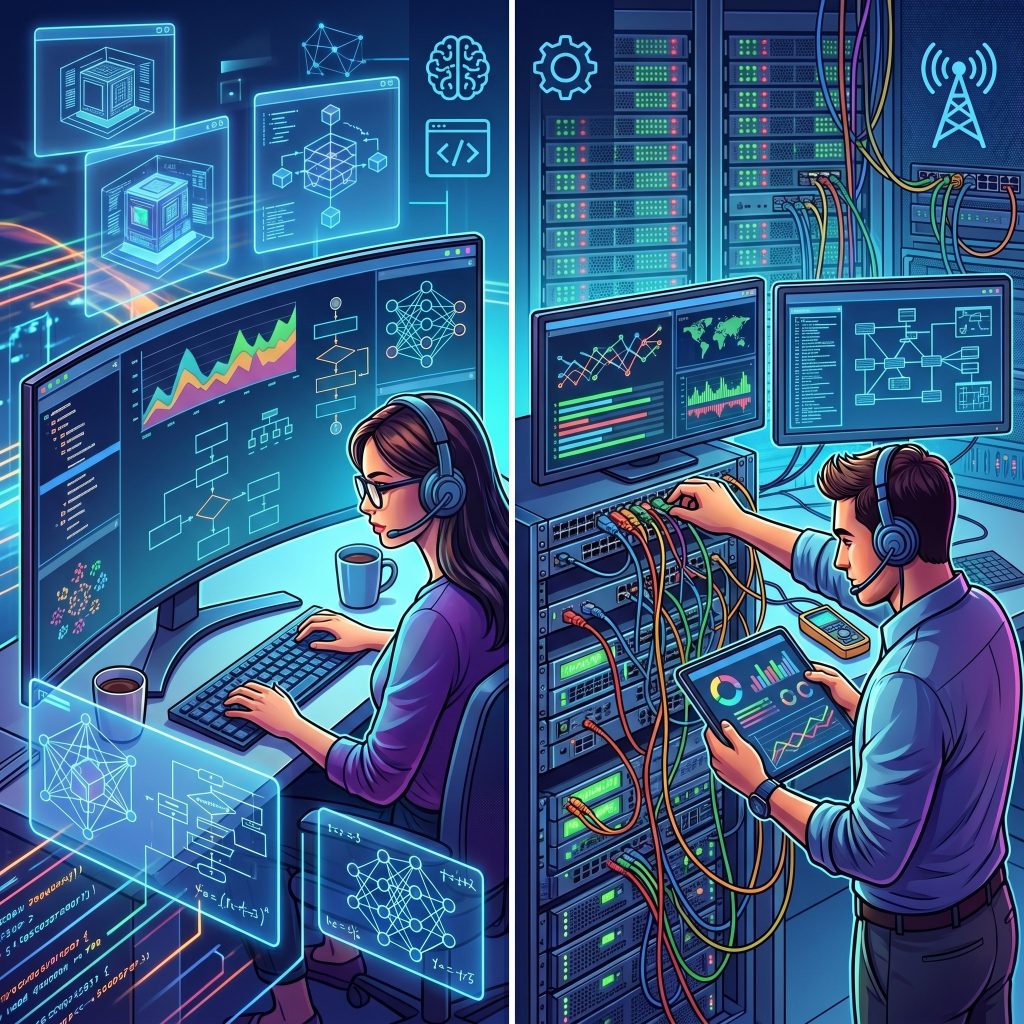 When evaluating computer science vs information technology, the distinction usually comes down to creation versus application. Computer scientists invent and build the technology; IT professionals install, maintain, and optimize that technology for organizational use.
Academic Focus and Degrees
University programs highlight these core differences clearly. A computer science degree heavily emphasizes theory, mathematics, and programming logic. You will spend hours writing code, debugging programs, and proving mathematical concepts.
Conversely, a degree in computer information technology leans heavily into practical application. Coursework often covers project management, business systems analysis, network architecture, and security policies. Many IT programs also prepare students for industry-standard certifications, such as CompTIA Network+, Cisco CCNA, or Certified Information Systems Security Professional (CISSP). These certifications hold significant weight in the IT job market, sometimes matching or exceeding the value of a formal degree.
Day-to-Day Responsibilities
The daily work environment also varies significantly between the two fields. A software developer might spend most of their day working independently, staring at an integrated development environment (IDE) and solving logic bugs within a codebase. Their primary interaction might be a brief daily stand-up meeting with their immediate development team.
An IT systems administrator often experiences a more reactive work environment. They monitor dashboards for network outages, respond to helpdesk tickets from frustrated employees, and perform hardware upgrades during off-hours. The IT professional must be adaptable, ready to drop a long-term project to address a sudden server failure or security breach.
Evaluating Market Demand and Salary Expectations
Both fields offer excellent job security and lucrative compensation packages. As businesses continue to digitize their operations, the demand for tech talent consistently outpaces the supply of qualified workers.
Computer science roles, particularly in software engineering and artificial intelligence, often command higher starting salaries. The specialized mathematical knowledge and coding expertise required create a higher barrier to entry. However, senior IT professionals—especially those specializing in enterprise cloud architecture or cybersecurity—can easily reach executive-level compensation packages.
Ultimately, your earning potential in either field will depend on your willingness to continuously learn. Technology evolves rapidly. A programming language or networking protocol that is essential today might become obsolete in five years. Professionals who commit to lifelong learning, regardless of their specific title, will always find themselves in high demand.
Emerging Technologies in IT and Computer Science
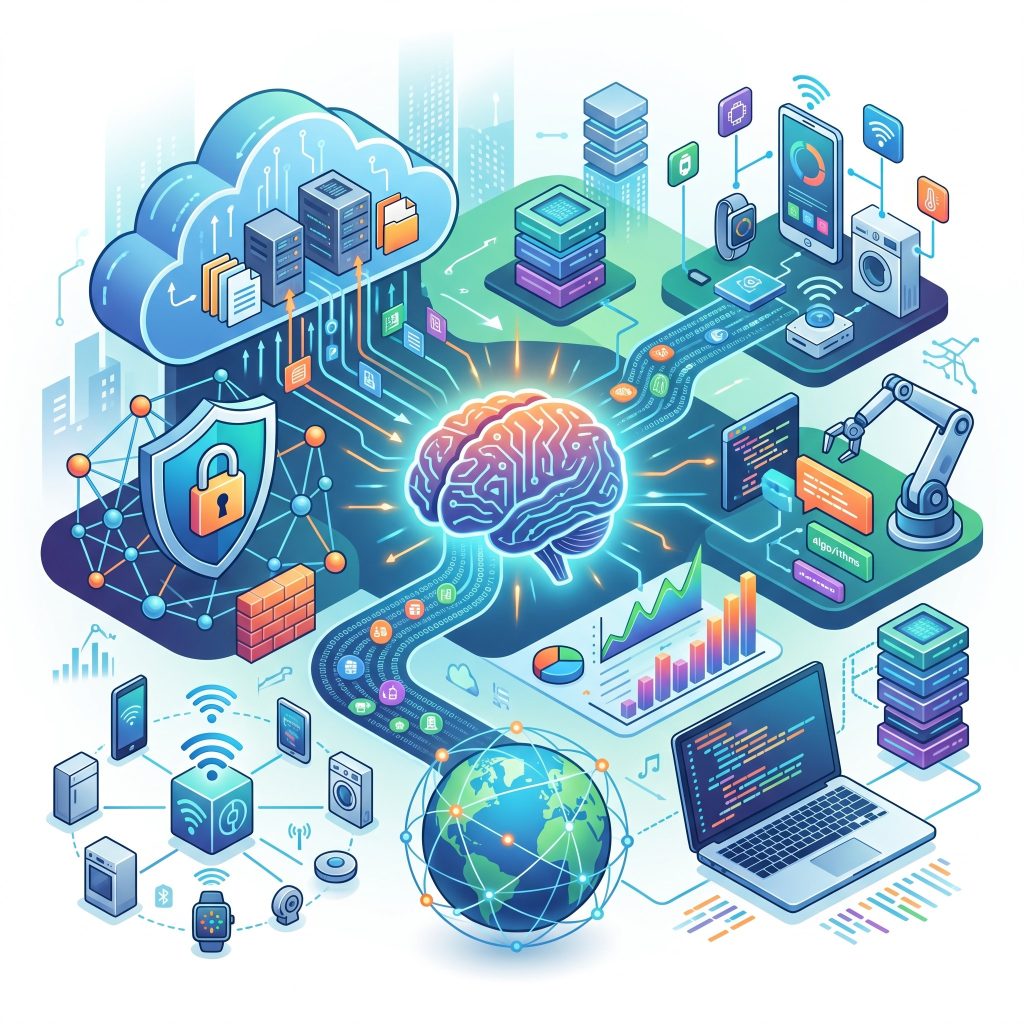 Emerging technologies are rapidly reshaping both information technology and computer science, creating new opportunities and redefining traditional career roles. Fields such as artificial intelligence, machine learning, blockchain, quantum computing, and edge computing are driving innovation across industries. Computer science plays a key role in developing the algorithms and models behind these technologies, while IT focuses on implementing and scaling them in real-world systems. Organizations are increasingly adopting automation and intelligent systems to improve efficiency, security, and decision-making. As these technologies evolve, professionals must continuously update their skills to remain relevant. Understanding these advancements is essential for anyone entering the tech industry, as they influence everything from software development to enterprise infrastructure. The ability to adapt to new tools and frameworks is becoming just as important as mastering foundational computing concepts, making lifelong learning a core requirement in modern tech careers.
Cybersecurity and Digital Protection
Cybersecurity has become one of the most critical areas within both information technology and computer science due to the increasing reliance on digital systems. Cyber threats such as data breaches, ransomware attacks, and identity theft pose significant risks to individuals, businesses, and governments. IT professionals are responsible for implementing security measures like firewalls, encryption, access control, and continuous monitoring systems. Meanwhile, computer scientists contribute by designing secure algorithms, cryptographic systems, and secure software architectures. The demand for cybersecurity experts continues to grow as organizations store more sensitive data online. Protecting digital infrastructure requires both technical expertise and strategic thinking. Professionals in this field must stay updated with evolving threats and security protocols. Strong problem-solving skills, attention to detail, and knowledge of networking systems are essential for building resilient digital environments that can withstand modern cyberattacks.
Cloud Computing and Modern Infrastructure
Cloud computing has transformed how businesses store, process, and manage data, becoming a core component of modern IT systems. Instead of relying on physical servers, organizations now use cloud platforms to access scalable computing resources on demand. This shift allows companies to reduce costs, improve flexibility, and enhance performance. Information technology professionals are responsible for managing cloud infrastructure, ensuring system uptime, and optimizing resource usage. Computer science contributes by developing efficient cloud algorithms, distributed systems, and scalable software architectures. Major cloud providers offer services for storage, computing power, machine learning, and application hosting, enabling rapid digital transformation. As businesses continue migrating to the cloud, skills in cloud architecture, DevOps, and infrastructure automation are becoming highly valuable. Understanding cloud systems is now essential for anyone pursuing a career in IT or computer science.
Artificial Intelligence and Machine Learning Growth
Artificial intelligence and machine learning are among the most influential developments in modern computer science. These technologies enable machines to learn from data, recognize patterns, and make intelligent decisions without explicit programming. Applications include voice assistants, recommendation systems, autonomous vehicles, and predictive analytics. Computer scientists focus on building algorithms, training models, and improving accuracy and performance. IT professionals support these systems by managing data pipelines, deploying models, and maintaining infrastructure. The growth of AI has created new interdisciplinary roles that combine programming, mathematics, and data analysis. As AI becomes more integrated into everyday technology, ethical considerations such as bias, transparency, and accountability are also gaining importance. Understanding machine learning fundamentals is increasingly valuable for both students and professionals entering the tech industry.
Education and Skill Development Paths
Education in information technology and computer science is evolving to match industry demands. Traditional university degrees remain important, but alternative learning paths such as online courses, bootcamps, and certifications are becoming increasingly popular. Computer science programs emphasize mathematics, programming theory, and algorithm design, while IT programs focus on networking, systems administration, and cybersecurity. Certifications like AWS Certified Solutions Architect, Cisco CCNA, and CompTIA Security+ help validate practical skills in specific areas. Continuous learning is essential because technology changes rapidly, and professionals must adapt to new tools and frameworks. Hands-on projects, internships, and real-world experience are also critical for building a strong portfolio. Employers value both formal education and practical expertise, making a blended learning approach the most effective strategy for career growth in tech.
Future Career Opportunities in the Tech Industry
The future of careers in information technology and computer science is expanding rapidly as digital transformation continues across all industries. New job roles are emerging in fields such as AI engineering, data engineering, cloud architecture, cybersecurity analysis, and full-stack development. Remote work opportunities are also increasing, allowing professionals to collaborate globally. As automation becomes more widespread, routine tasks are being replaced by intelligent systems, shifting human roles toward problem-solving, design, and innovation. Both IT and computer science professionals will play a key role in shaping smart cities, digital healthcare, financial technology, and autonomous systems. The demand for skilled tech workers is expected to remain strong for decades. Success in this evolving landscape depends on adaptability, continuous learning, and the ability to integrate multiple technologies into practical solutions that solve real-world problems.
Frequently Asked Questions (FAQ)
What is the main difference between information technology and computer science?
The main difference is focus. Computer science is centered on building software, algorithms, and computational systems, while information technology focuses on applying and managing existing technology in real-world environments such as businesses, networks, and organizations.
Which is harder: computer science or information technology?
Computer science is generally considered more mathematically and theoretically intensive, requiring strong problem-solving and programming skills. Information technology is usually more application- and systems-focused, involving practical tasks like networking, support, and infrastructure management. Difficulty depends on your personal strengths and interests.
Can I switch from IT to computer science or vice versa?
Yes, many professionals transition between the two fields. Since both share foundational knowledge in computing, programming, and systems, switching is possible with additional learning in areas like advanced math for computer science or networking and security for IT.
Which field has better job opportunities?
Both fields have strong job demand. Computer science often leads to roles in software development, artificial intelligence, and data science, while IT offers opportunities in cybersecurity, network administration, and cloud computing. The best choice depends on the type of work you want to do.
Do IT professionals need coding skills?
Basic coding knowledge can be helpful in IT, especially for automation and scripting tasks, but it is not always required. Many IT roles focus more on systems, hardware, networking, and security rather than software development.
Making Your Final Decision in the Tech Landscape
Choosing to study information technology computer science opens doors to some of the most dynamic and impactful careers available today. Both pathways offer the chance to solve complex problems, build innovative solutions, and shape the future of how humanity interacts with the digital world.
If you possess a highly analytical mind, love mathematics, and want to build software from the ground up, computer science provides the ideal framework for your ambitions. If you prefer hands-on troubleshooting, enjoy working directly with business systems, and want to protect networks from cyber threats, computer information technology will serve you perfectly.



Leave a Reply