

If you’ve ever tried to explain what you do for a living to someone outside the tech world, you already know the confusion that surrounds these two fields. Computer engineering and information technology are often used interchangeably—but they’re not the same thing. Understanding the distinction matters, whether you’re a student choosing a major, a professional considering a career pivot, or a business leader trying to build the right team.
Both fields sit at the intersection of hardware, software, and human need. Both are critical to how modern organizations function. But the problems they solve, the skills they demand, and the career paths they open are genuinely different. This guide breaks it all down—clearly, practically, and without the jargon overload.
What Is Computer Engineering?
Computer engineering is the discipline that bridges electrical engineering and computer science. Computer engineers design, build, and test the physical and logical components that make computing systems work. Think microprocessors, embedded systems, circuit boards, and the firmware that runs on them.
At its core, computer engineering is about creation at the hardware and systems level. A computer engineer might design the chip inside a medical device, develop the architecture of a graphics processing unit, or build the low-level software that tells a robotic arm how to move. The work is precise, deeply technical, and often invisible to end users—even though it underpins almost every piece of technology they touch.
Key Focus Areas in Computer Engineering
Computer engineers typically specialize in one or more of the following areas:
- Computer architecture: Designing the structure and behavior of computer systems, from CPUs to memory hierarchies
- Embedded systems: Building hardware-software systems integrated into devices like cars, appliances, and medical equipment
- Digital signal processing: Manipulating signals for applications in audio, video, telecommunications, and more
- VLSI design: Creating complex integrated circuits with millions of transistors on a single chip
- Computer networking at the hardware level: Designing the physical infrastructure that supports data transmission
Computer systems technology sits at the heart of this discipline. Without the physical machines that computer engineers design, no software would have anything to run on.
What Is Information Technology?
 Information technology takes a different angle. Where computer engineering is about building the machine, IT is about deploying, managing, and optimizing technology within organizations. IT professionals keep systems running, secure data, support users, and ensure that the technology an organization depends on actually delivers value.
The scope of IT is broad. On any given day, an IT team might be configuring servers, rolling out a new enterprise software platform, troubleshooting a network outage, or developing a cybersecurity strategy. The common thread is organizational utility—technology solutions that serve real business needs.
Key Focus Areas in Information Technology
- Systems administration: Managing and maintaining servers, operating systems, and infrastructure
- Computer networking: Designing, implementing, and managing the networks that connect users and systems
- Cybersecurity: Protecting data and systems from unauthorized access, breaches, and attacks
- Database management: Organizing and maintaining the data that organizations depend on
- IT support and service management: Helping users get the most out of technology tools and resolving technical issues
- Cloud computing: Deploying and managing infrastructure and services via platforms like AWS, Azure, and Google Cloud
IT professionals are the people who make sure technology solutions actually work in the real world—at scale, under pressure, and across diverse user needs.
Where Computer Engineering and IT Overlap
The line between computer engineering and information technology isn’t always clean. Several areas sit squarely in the overlap.
Computer networking is one of the most prominent examples. Network engineers need to understand both the hardware that transmits data (routers, switches, fiber optic cables) and the software protocols that govern how that data moves. This dual focus draws from both computer engineering and IT.
Cloud infrastructure is another gray zone. Building cloud platforms requires hardware engineering expertise. Managing and consuming cloud services is firmly in IT territory. Many professionals in this space blend skills from both disciplines.
Embedded systems and IoT represent a growing convergence point. As more devices connect to networks—from industrial sensors to smart home gadgets—the people building them need to think like engineers and the people managing them need to think like IT professionals.
Understanding where these fields meet is just as important as understanding where they diverge.
Computer Engineering vs. IT: Educational Pathways
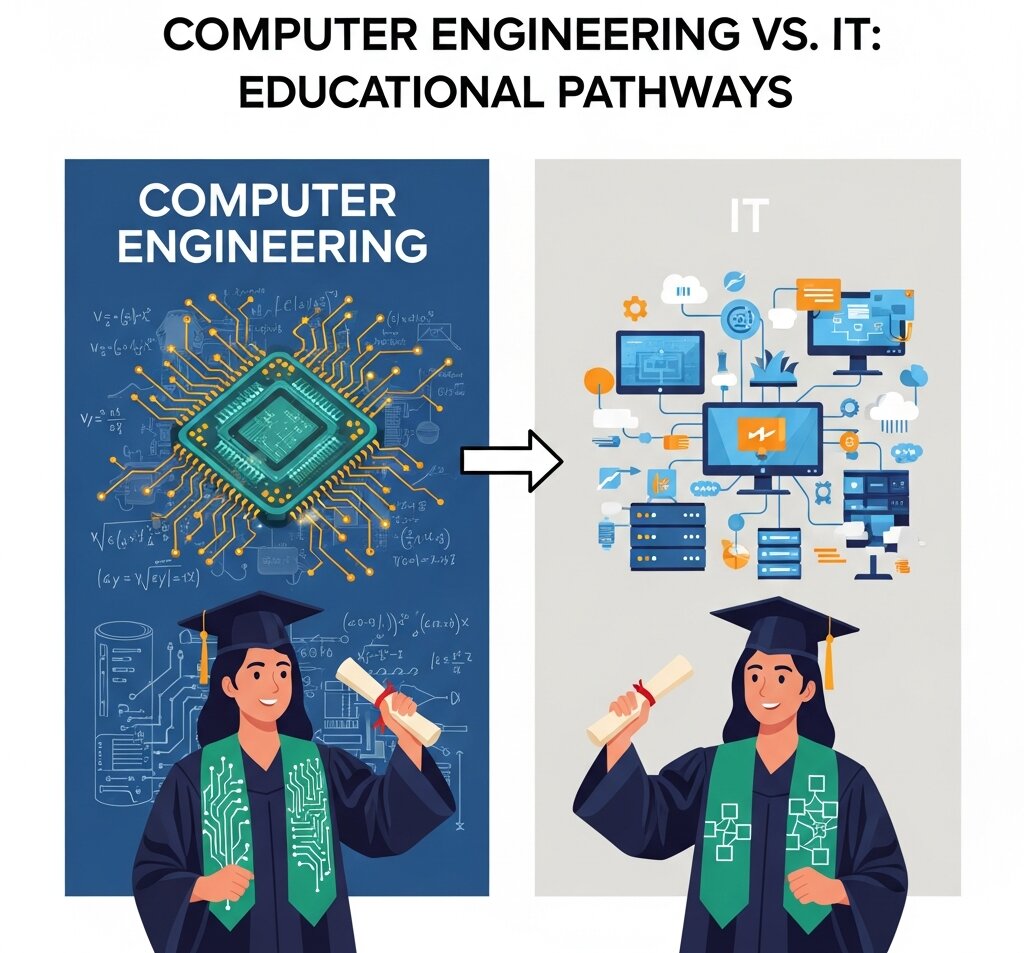 The academic routes into these two fields reflect their different emphases.
Computer engineering programs typically sit within engineering schools. Coursework covers mathematics, physics, digital logic, computer architecture, signal processing, and embedded systems. Students graduate with a strong foundation in both electrical engineering principles and software development. A bachelor’s degree in computer engineering usually takes four years, with graduate programs available for specialization.
Information technology programs are more applied in focus. Curricula cover computer networking, systems administration, database management, cybersecurity, and IT project management. Many IT professionals also enter the field through associate degrees, certifications (such as CompTIA A+, Network+, or Cisco’s CCNA), or bootcamps. The pathway is often more flexible than computer engineering, with multiple entry points at different stages of a career.
That said, the lines are blurring. Computer science degrees often incorporate both hardware and systems content. Many universities now offer dedicated programs in computer systems technology that blend elements of engineering, programming, and IT management.
Career Paths and Salary Expectations
Both fields offer strong career prospects, though the roles and compensation structures differ.
Careers in Computer Engineering
- Hardware engineer: Designs and tests computer components, including processors and circuit boards. Median annual salary in the US: approximately $132,000 (Bureau of Labor Statistics, 2023)
- Embedded systems engineer: Develops the software and hardware integration for devices outside traditional computing environments
- Firmware engineer: Writes the low-level code that interfaces directly with hardware
- FPGA engineer: Programs field-programmable gate arrays for applications in defense, aerospace, and telecommunications
- Chip designer: Works on the architecture of processors and integrated circuits, often at semiconductor companies like Intel, AMD, or NVIDIA
Careers in Information Technology
- Network engineer: Designs and manages computer networking infrastructure. Median salary: approximately $120,000 (BLS, 2023)
- Systems administrator: Maintains and manages servers and IT infrastructure
- Cybersecurity analyst: Monitors and defends against digital threats. One of the fastest-growing roles in the tech industry
- Cloud architect: Designs and oversees cloud computing environments
- IT manager: Oversees technology strategy and teams within an organization. Median salary: approximately $164,000 (BLS, 2023)
The demand for skilled professionals in both fields continues to grow. The US Bureau of Labor Statistics projects employment in computer and information technology occupations to grow 15% from 2021 to 2031—much faster than the average for all occupations.
The Role of Computer Networking Across Both Fields
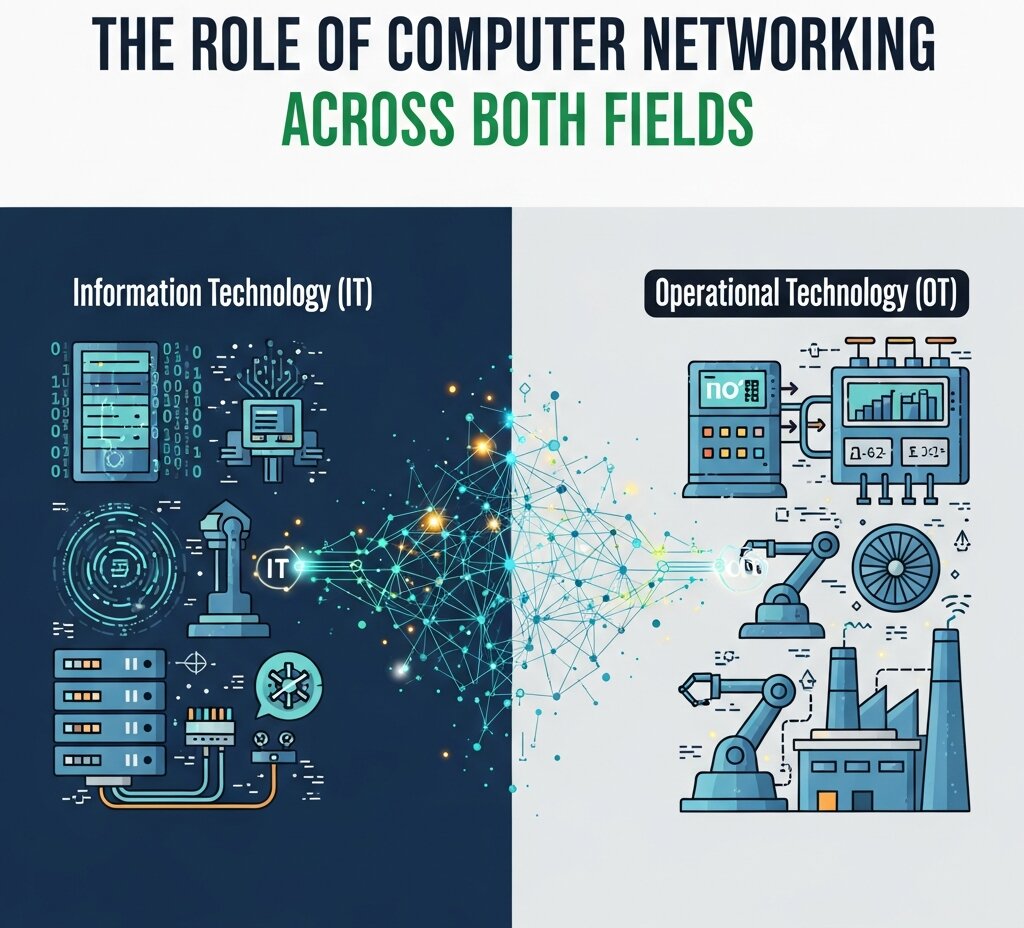 Computer networking deserves special attention because it’s central to both disciplines—and it’s one of the fastest-evolving areas in tech.
Networks are the infrastructure that allows devices, systems, and people to communicate. From the local area network in an office building to the global internet itself, computer networking is the connective tissue of modern technology solutions.
For computer engineers, networking involves designing the hardware and physical protocols that transmit data efficiently and reliably. For IT professionals, it’s about configuring, securing, and troubleshooting the networks their organizations depend on.
The rise of software-defined networking (SDN) and network function virtualization (NFV) has pushed networking further into software territory—making it an area where engineering and IT expertise increasingly overlap. Professionals who can operate fluently in both domains are in high demand.
How Businesses Benefit From Both Disciplines
Organizations don’t have to choose between computer engineering and IT—they need both, at different levels and for different purposes.
Computer engineers build the tools. IT professionals deploy and manage them. When these two functions work in alignment, technology solutions deliver genuine business value. When they don’t, the result is expensive: systems that don’t scale, infrastructure that can’t be maintained, and technology investments that fail to pay off.
For businesses building products—especially hardware-adjacent ones like IoT devices, industrial equipment, or consumer electronics—computer engineering talent is essential from the earliest stages of development. For businesses that primarily consume technology rather than build it, IT expertise is the critical investment.
Increasingly, the most competitive organizations are those that cultivate both. Cross-functional teams that combine hardware knowledge, software skills, networking expertise, and IT operations capability are better equipped to move quickly, solve complex problems, and adapt to a rapidly changing technology landscape.
Choosing the Right Path for You
So which direction makes more sense to pursue? The answer depends on where your interests and strengths lie. If you’re drawn to building things from the ground up—designing circuits, writing firmware, optimizing hardware performance—computer engineering is likely the better fit. The work is deeply technical, often requires graduate-level education for advanced roles, and tends to be concentrated in industries like semiconductors, aerospace, defense, and consumer electronics.
If you’re more interested in applying technology to organizational problems—setting up and securing networks, managing infrastructure, leading IT strategy—information technology offers a broader range of entry points and a more direct connection to business outcomes. The field rewards problem-solvers who can translate technical complexity into clear, practical solutions for non-technical stakeholders.
Neither path is superior. Both are essential. And for those willing to build skills across both domains—particularly in areas like computer networking, cloud computing, and embedded IoT systems—the opportunities are substantial.
Frequently Asked Questions
1. What is the main difference between computer engineering and information technology?
Computer engineering focuses on designing and developing computer hardware, embedded systems, and low-level software, while information technology focuses on implementing, managing, securing, and maintaining technology systems that support business operations.
2. Which career offers better job opportunities: computer engineering or IT?
Both fields offer excellent career opportunities. Computer engineering is ideal for hardware and system design roles, whereas IT provides diverse career paths in networking, cybersecurity, cloud computing, systems administration, and technical support.
3. Is computer networking part of computer engineering or information technology?
Computer networking belongs to both disciplines. Computer engineers design networking hardware and communication technologies, while IT professionals configure, monitor, secure, and maintain network infrastructure for organizations.
4. Do computer engineers need programming skills?
Yes. Computer engineers use programming languages such as C, C++, Python, and Verilog to develop firmware, embedded systems, hardware interfaces, and software that interacts directly with computer hardware.
5. What qualifications are required for a career in information technology?
Most IT professionals earn a degree in information technology or a related field, although certifications like CompTIA A+, Network+, Security+, CCNA, AWS, and Microsoft Azure can also help launch or advance an IT career.
6. Which field has higher earning potential?
Salary depends on specialization, experience, and location. Computer engineering roles in semiconductor and hardware design often command high salaries, while senior IT positions such as cloud architect, cybersecurity manager, and IT director can also offer excellent compensation.
7. Can I switch from information technology to computer engineering?
Transitioning is possible but may require additional education in mathematics, electronics, computer architecture, and hardware design. Many professionals begin in IT and later pursue engineering-related certifications or advanced degrees.
8. How is cloud computing related to both fields?
Computer engineers help build and optimize the hardware and infrastructure that power cloud platforms, while IT professionals deploy, manage, secure, and maintain cloud services for businesses and end users.
9. Which field is better for students interested in artificial intelligence and IoT?
Both fields contribute to AI and IoT. Computer engineering focuses on AI hardware, embedded devices, and edge computing, while IT specializes in deploying, managing, securing, and integrating AI and IoT solutions within organizations.
10. How do I choose between computer engineering and information technology?
Choose computer engineering if you enjoy electronics, hardware design, embedded systems, and low-level programming. Choose information technology if you’re interested in networking, cybersecurity, cloud computing, infrastructure management, and solving business technology challenges.
The Future of Computer Engineering and Information Technology
The boundaries between hardware and software, between engineering and IT, will continue to shift. Quantum computing, neuromorphic chips, AI-accelerated hardware, and edge computing are all pushing the frontier in ways that will require new combinations of expertise.
Computer systems technology will grow more complex. Networks will carry more data, faster, with higher stakes for reliability and security. The organizations that thrive will be those that invest in understanding both the machines and the systems that run on them.
For professionals in either field, the message is clear: stay curious, keep learning, and don’t let the boundaries of your job title limit the breadth of your knowledge.



Leave a Reply