

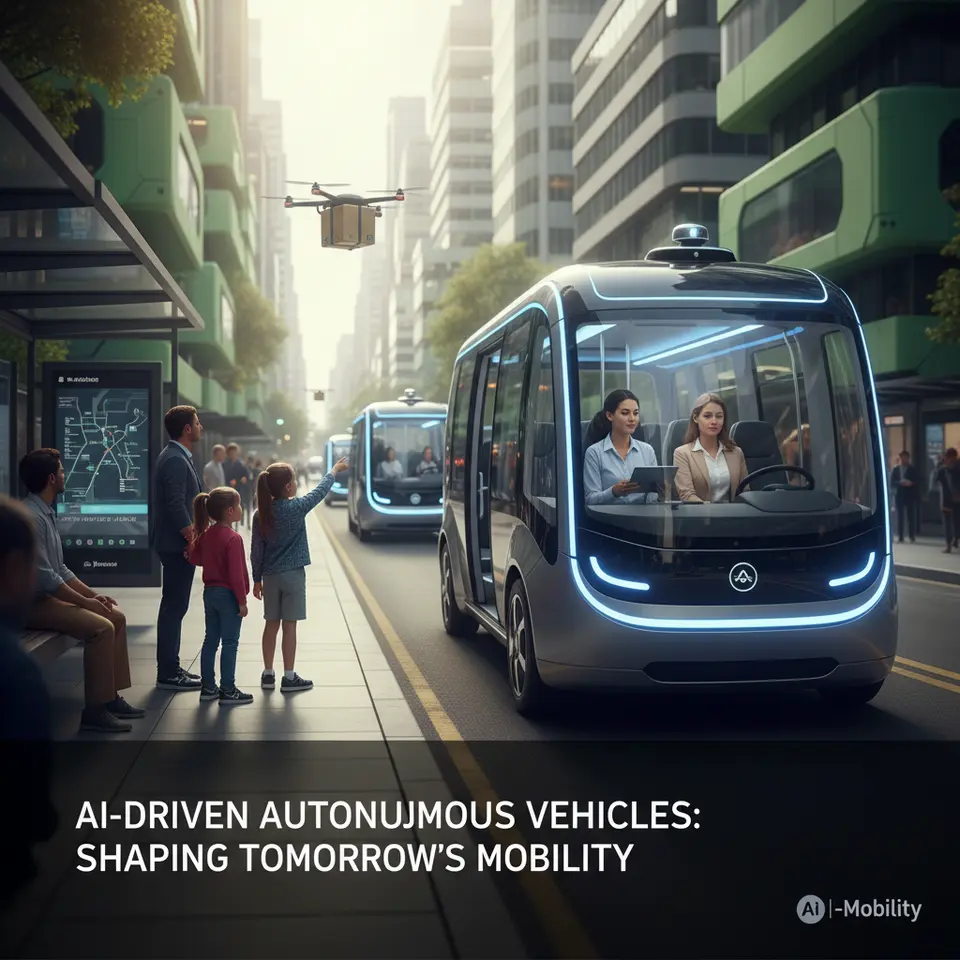
In today’s digital landscape, AI-driven autonomous vehicles are heralding a new era in mobility, blending advanced computing, robotics, and automotive engineering to redefine how people and goods traverse urban streets and highways. Today, self-driving cars utilize an array of sensors, high-precision maps, and machine learning algorithms to perceive their surroundings, chart safe courses, and dynamically respond to changing road conditions. This comprehensive exploration delves into the fundamental elements that make autonomy possible, spanning sensor technologies, decision-making frameworks, connectivity solutions, and the evolving regulatory environment.
Currently, major technology companies, automotive manufacturers, and innovative startups are investing heavily in the research and development of self-driving systems, with governments and regulatory bodies collaborating to establish safety standards and legal frameworks. From ride-hailing shuttles to last-mile delivery robots, AI-driven autonomous vehicles promise to enhance road safety, reduce congestion, and enable sustainable urban planning. By synthesizing insights from leading institutions and real-world deployments, this article will provide a thorough understanding of the technological underpinnings, operational challenges, and future prospects of autonomous mobility.
Whether you are an industry stakeholder, technology enthusiast, or policy maker, this guide offers clarity on how AI-driven autonomous vehicles operate today, the steps required to validate their safety, and the innovations that will define their continued advancement this year (2026). Let’s embark on a journey through the systems, strategies, and standards shaping the autonomous revolution.
Evolution of AI-driven Autonomous Vehicles
From Assisted Driving to Full Autonomy
The progression toward AI-driven autonomous vehicles has unfolded over several decades, marked by incremental enhancements in driver assistance technologies. Early innovations like adaptive cruise control allowed vehicles to maintain safe distances using radar sensors, while lane-keeping assistance employed cameras to detect road markings. As systems matured, sensor arrays expanded to include LiDAR units, ultrasonic detectors, and high-resolution cameras, creating a comprehensive perception suite capable of understanding complex traffic scenarios.
Mapping and Localization Advances
Parallel to sensor improvements, mapping and localization have evolved dramatically. Modern autonomous cars leverage centimeter-accurate, high-definition 3D maps combined with Simultaneous Localization and Mapping (SLAM) techniques. By integrating GPS, inertial measurement units (IMUs), and visual odometry, vehicles can pinpoint their location even in urban canyons and underground tunnels. These advancements are critical in enabling AI-driven autonomous vehicles to navigate with precision and reliability.
Levels of Automation
The Society of Automotive Engineers (SAE) defines six levels of driving automation, from Level 0 (no automation) to Level 5 (full automation). Today’s consumer vehicles often offer Level 2 features—partial driving automation under driver supervision. Conditional automation at Level 3 allows the vehicle to assume full control within specific operational design domains, reverting control to the human driver when conditions exceed system limits. Levels 4 and 5, which target hands-off capabilities in most or all driving situations, remain the ultimate objectives driving research investments across the industry.
AI-driven autonomous vehicles rely on the seamless integration of hardware, software, and robust validation processes to ascend these automation levels. Innovations in computing power, sensor technology, and intelligent algorithms have brought us closer than ever to widespread adoption. Yet, the journey remains ongoing, with ongoing testing, regulatory approvals, and public acceptance shaping the rollout strategy.
Sensors and Perception: The Eyes and Ears of Self-Driving Cars
LiDAR, Radar, and Vision Systems
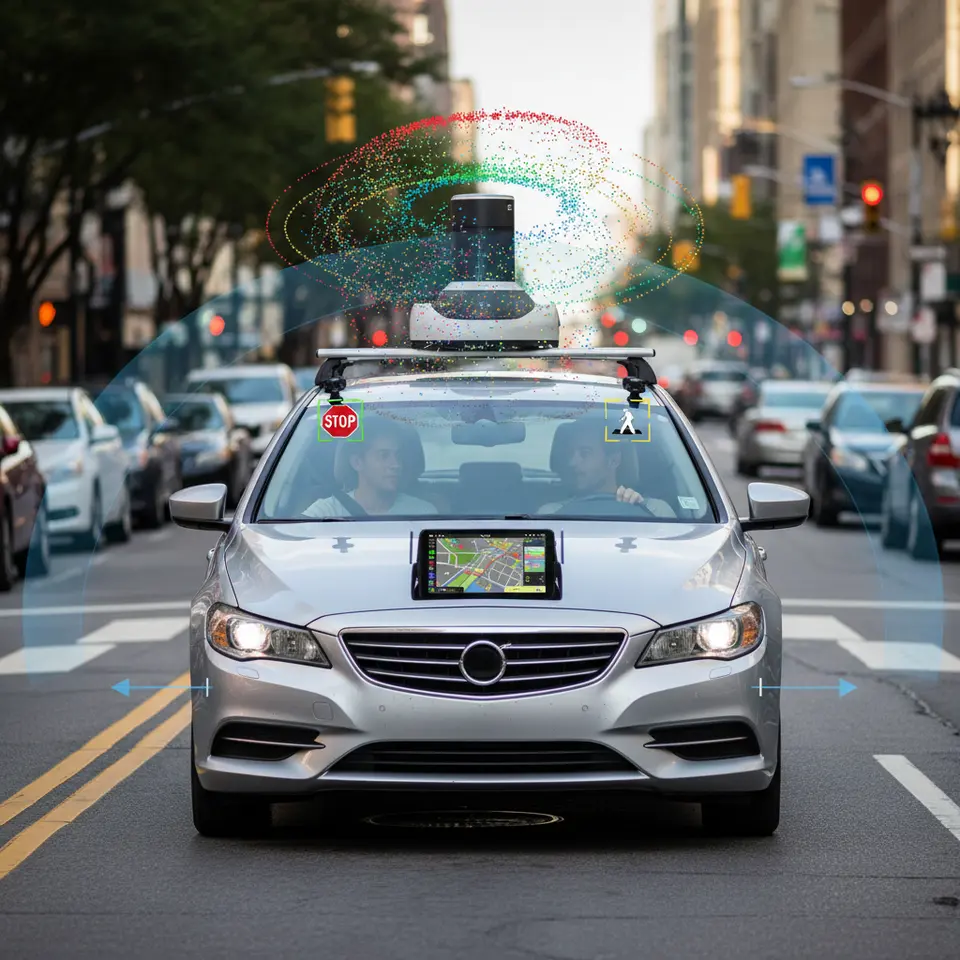
At the core of AI-driven autonomous vehicles lies a sophisticated sensor suite designed to deliver a 360-degree understanding of the environment. LiDAR (Light Detection and Ranging) produces high-resolution 3D point clouds by emitting laser pulses and measuring their reflections. This capability provides detailed spatial mapping, crucial for recognizing road edges, obstacles, and other nearby objects. Radar complements LiDAR by reliably detecting object velocity and distance, even in poor visibility conditions such as rain or fog. High-definition cameras supply rich color and texture data, enabling traffic sign recognition, lane detection, and pedestrian classification.
Sensor Fusion for Robust Perception
Sensor fusion techniques combine data from LiDAR, radar, and cameras to form a unified representation of the driving scene. By leveraging each sensor’s unique strengths—LiDAR’s spatial precision, radar’s motion sensitivity, and camera imagery’s semantic detail—perception algorithms can detect and track vehicles, cyclists, pedestrians, and static obstacles with high confidence. On-board computing platforms, often featuring specialized GPUs and neural accelerators, process these multi-modal inputs in real time to support safe navigation.
AI-Powered Object Detection and Tracking
Deep learning models, such as convolutional neural networks (CNNs) and transformer-based architectures, play a pivotal role in object detection, semantic segmentation, and behavior prediction. These systems undergo extensive training on vast datasets covering diverse lighting, weather, and traffic scenarios. Institutions like National Institute of Standards and Technology ensure that testing protocols are rigorous and standardized, promoting reliable performance across AI-driven autonomous vehicles. Virtual simulation environments further accelerate validation, enabling millions of miles of synthetic driving tests before on-road deployment.
Machine Learning and Decision-Making Frameworks
Path Planning and Control Strategies
Once perception modules generate a clear view of the surroundings, decision-making frameworks determine optimal driving strategies. Path planning algorithms balance efficiency, comfort, and safety by charting trajectories that avoid collisions and comply with traffic rules. Many companies adopt hybrid approaches combining deterministic rule-based logic for traffic law adherence with probabilistic models to manage uncertainty in dynamic traffic conditions.
Predictive Modeling of Road Users
Behavior prediction is essential to proactive decision-making. AI-driven autonomous vehicles employ models that forecast the likely movements of other agents—such as a cyclist weaving between lanes or a pedestrian stepping onto the road. By anticipating trajectories several seconds ahead, these systems adjust speed and steering to mitigate potential hazards. Reinforcement learning techniques, validated extensively in simulation, refine driving policies through trial and error before real-world application.
Continuous Learning and Over-the-Air Updates
Fleet data aggregation allows ongoing learning from real-world operations. Edge cases and rare events encountered by vehicles are logged, labeled, and incorporated into centralized training pipelines, enhancing the robustness of AI-driven autonomous vehicles over time. Over-the-air (OTA) software updates enable the rapid deployment of improvements, new features, and safety patches. This closed-loop learning cycle ensures that vehicles operate with the latest advancements in perception and planning as of this year (2026).
Connectivity, Edge Computing, and Smart Infrastructure
Low-Latency Communication Networks
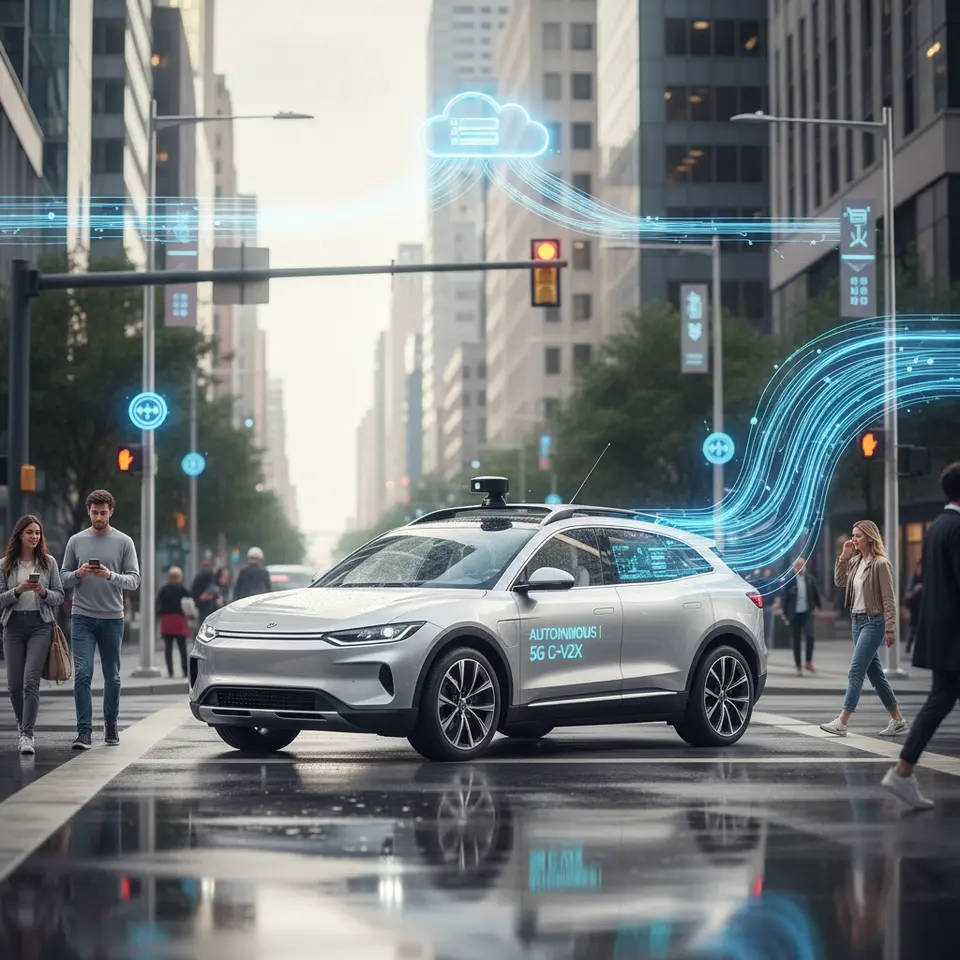
Autonomous vehicles generate vast volumes of data that must be processed and exchanged efficiently. High-bandwidth, low-latency networks such as 5G and Cellular Vehicle-to-Everything (C-V2X) facilitate real-time communication between vehicles, infrastructure, and cloud services. When connectivity is strong, vehicles can receive up-to-date map revisions, traffic signal timings, and fleet management directives to optimize performance.
Edge Computing for On-Board Processing
To guarantee safety in scenarios where network coverage is intermittent, critical functions run on edge computing platforms embedded within the vehicle. These systems handle time-sensitive tasks like obstacle detection, emergency braking, and collision avoidance. By processing sensor inputs locally, AI-driven autonomous vehicles maintain robust autonomy even when external networks are unavailable.
Cooperative Systems and Digital Infrastructure
Smart city initiatives are transforming urban roadways into intelligent ecosystems. Vehicle-to-infrastructure (V2I) communication with traffic signals, roadside sensors, and digital signage enhances situational awareness beyond line-of-sight limitations. Collaborative systems, outlined in standards from organizations such as the National Highway Traffic Safety Administration, enable smoother traffic flow and preemptive hazard warnings. Such cooperative approaches further elevate the capabilities of AI-driven autonomous vehicles.
Safety Standards, Regulations, and Ethical Implications
Validation through Simulation and Testing
Safety remains the paramount concern for AI-driven autonomous vehicles. Rigorous validation involves thousands of hours in simulated environments, closed-course trials, and monitored public road tests. Standards like ISO 26262 for functional safety and ISO/PAS 21448 (Safety Of The Intended Functionality) guide both hardware and software development to ensure reliability under a wide range of operating conditions.
Operational Design Domains and Regulatory Frameworks
Operational Design Domains (ODDs) specify the exact conditions—geographic regions, speed limits, weather parameters—where autonomous systems may operate. Policymakers and regulatory bodies collaborate to define liability structures, data reporting requirements, and safety benchmarks. Transparent disclosure of disengagement events and near-miss incidents builds public trust and drives iterative enhancements.
Ethical Considerations and Societal Impact
Embedding ethical frameworks into decision algorithms is crucial when unavoidable collision scenarios arise. Engineers and ethicists work together to establish priorities that reflect societal values. Additionally, the widespread adoption of AI-driven autonomous vehicles raises questions about job displacement for drivers, equitable access for underserved communities, and data privacy. Multidisciplinary research and stakeholder engagement are essential to address these complex challenges responsibly.
Frequently Asked Questions
What are the SAE levels of driving automation?
The Society of Automotive Engineers (SAE) defines six levels from Level 0 (no automation) to Level 5 (full autonomy). Levels 1–2 offer driver assistance, Level 3 provides conditional automation under supervision, and Levels 4–5 aim for hands-off and driverless operation in defined or all conditions.
How do LiDAR, radar, and cameras work together?
LiDAR generates precise 3D point clouds, radar measures object velocity and distance reliably in adverse conditions, and cameras capture rich visual details. Sensor fusion algorithms merge these data streams to form a comprehensive environmental model for safe navigation.
What safety standards govern autonomous vehicle development?
Key standards include ISO 26262 for functional safety and ISO/PAS 21448 for safety of intended functionality. Regulatory bodies also define Operational Design Domains (ODDs) and reporting requirements for testing and real-world deployments.
How does connectivity enhance autonomous driving?
High-bandwidth, low-latency networks like 5G and C-V2X support real-time data exchange with infrastructure and cloud services. Edge computing ensures critical functions run locally during network outages, maintaining safety and autonomy.
Conclusion
AI-driven autonomous vehicles stand at the forefront of a transportation revolution in today’s digital landscape, combining state-of-the-art sensors, powerful machine learning, robust connectivity, and stringent safety standards. While technical hurdles and regulatory complexities remain, ongoing collaboration among automakers, tech firms, government agencies, and research institutions is paving the way for broader deployment this year (2026). The promise of this technology extends beyond convenience: safer roads, reduced emissions, and enhanced mobility equity can profoundly benefit communities worldwide.
As we transition from pilot projects to scalable applications—ranging from urban ride-hailing fleets to long-haul trucking—the synergy between innovation and oversight will determine the pace of adoption. AI-driven autonomous vehicles are poised to redefine how we travel, deliver goods, and design smart cities. By staying informed and engaged, industry professionals and the public alike can help shape a future where autonomous mobility is safe, sustainable, and accessible to all.


Leave a Reply