

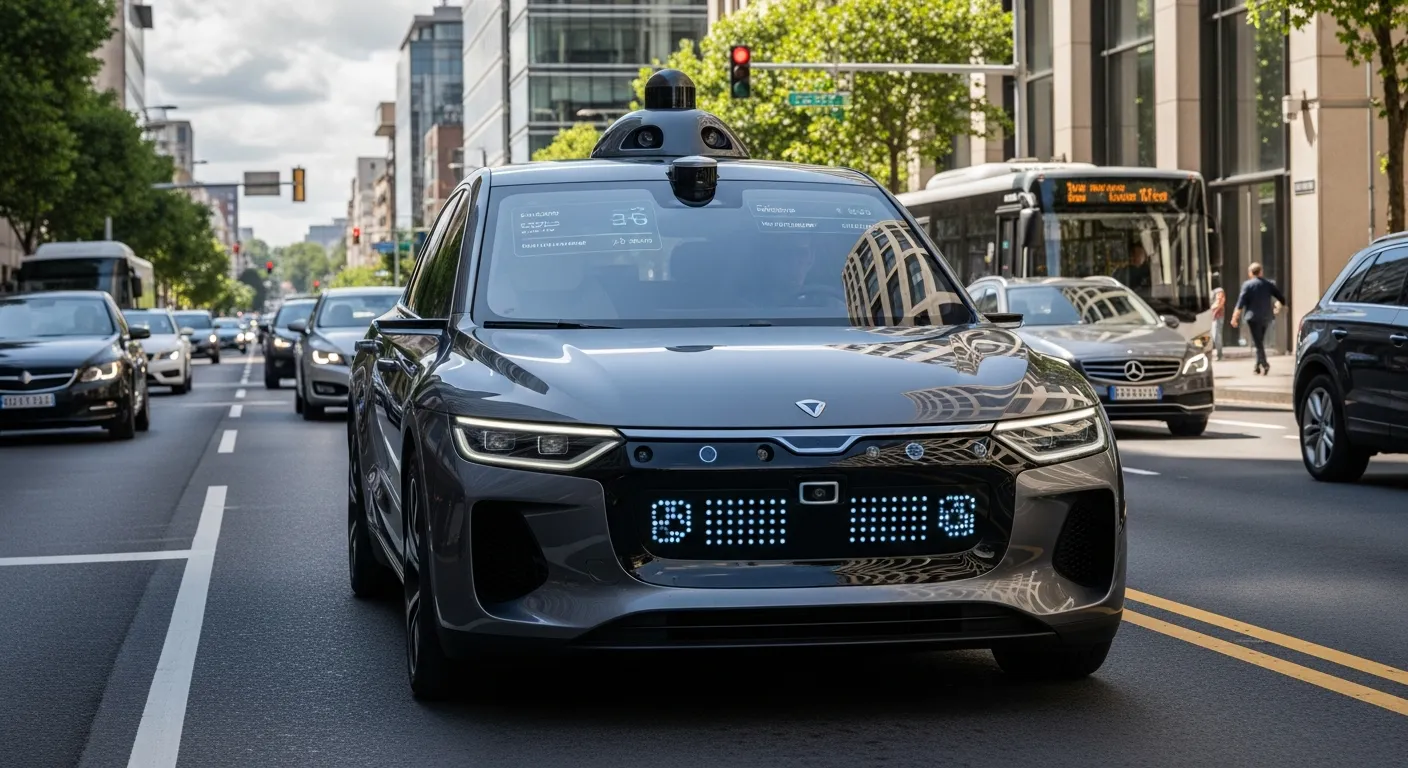
This comprehensive guide explores the sophisticated technologies powering autonomous vehicles. You will discover actionable insights into machine learning, sensor fusion, and regulatory frameworks. We highlight common implementation mistakes, expert strategies, and the profound impact self-driving technology has on global mobility ecosystems.
The Evolution of Autonomous Vehicles
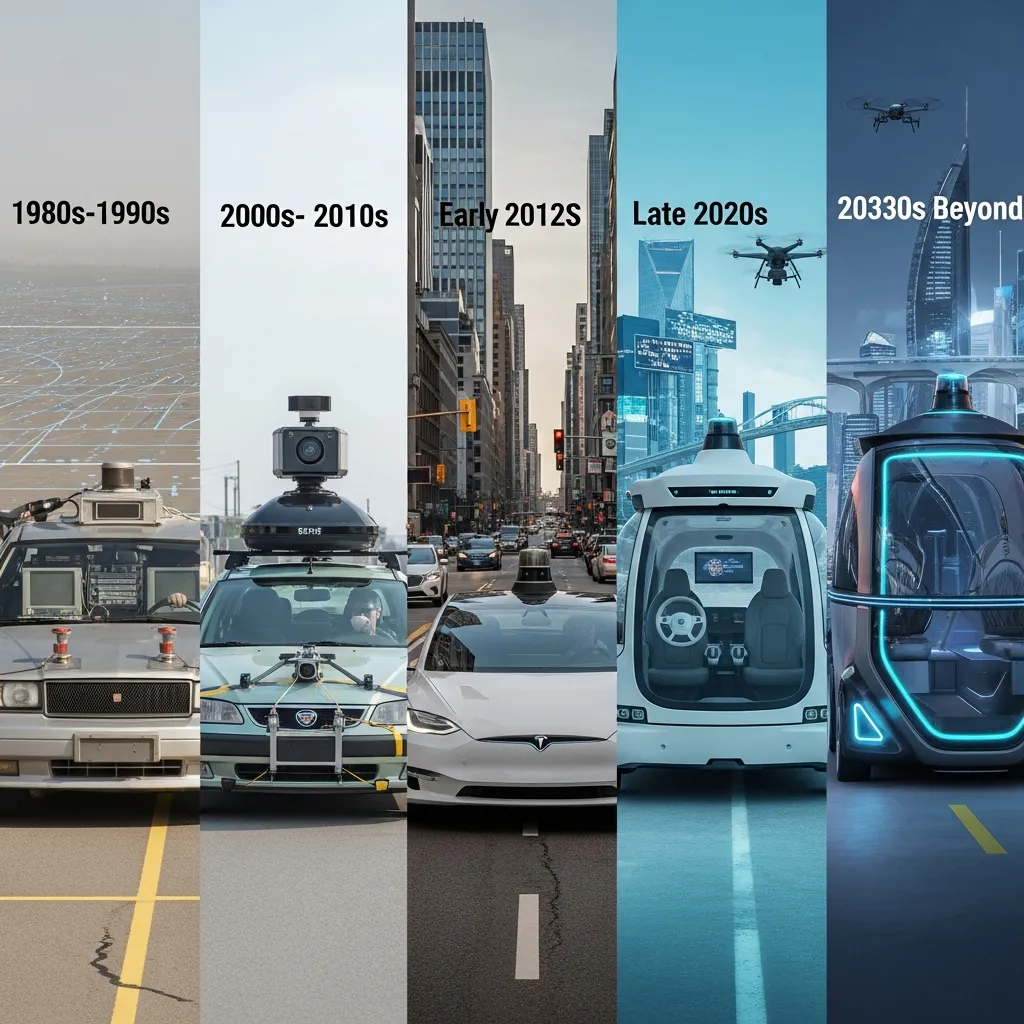
The journey of autonomous vehicles from theoretical concepts to tangible reality represents a monumental leap in human engineering. Historically, driving required constant human attention, rapid reflexes, and manual decision-making. Early experiments in automated driving relied on simple cruise control mechanisms and basic lane-keep assists. However, these rudimentary systems lacked the cognitive capacity to interpret complex, dynamic environments.
The introduction of artificial intelligence completely shifted this paradigm. Modern autonomous vehicles utilize vast neural networks and massive datasets to mimic human perception. They process millions of data points every second, allowing them to navigate chaotic urban environments safely. This rapid evolution democratizes transportation, offering mobility solutions to individuals unable to drive while simultaneously optimizing heavy freight logistics. As developers refine these technologies, autonomous vehicles transition from testing facilities to public roads, signaling a permanent shift in our mobility landscape.
Mini-Conclusion: A Foundation for Innovation
Understanding the historical progression of self-driving technology provides crucial context for modern developments. By recognizing how far the industry has come, stakeholders can better appreciate the complex artificial intelligence systems driving today’s autonomous vehicles.
Core Technologies Powering Autonomous Vehicles
To fully grasp how autonomous vehicles operate, you must examine the intricate web of artificial intelligence technologies acting as the vehicle’s brain. These systems work in perfect harmony to perceive the environment, predict external behaviors, and execute precise driving maneuvers.
Machine Learning and Deep Neural Networks
Machine learning forms the absolute foundation of autonomous vehicles. Engineers feed deep neural networks countless hours of driving footage, allowing the algorithms to recognize complex patterns. These networks learn to identify pedestrians, interpret traffic signals, and differentiate between a parked car and a moving bicycle. Because machine learning models improve continuously as they process more data, autonomous vehicles become progressively smarter and safer with every mile driven.
Computer Vision Systems
Computer vision enables autonomous vehicles to see the world. Using high-definition cameras mounted around the car perimeter, the AI interprets visual data in real time. Advanced algorithms calculate the distance, speed, and trajectory of surrounding objects. This visual processing allows the vehicle to read complex street signs, navigate construction zones, and respond instantly to sudden obstacles crossing its path.
LiDAR and Radar Integration
While cameras provide excellent visual data, they struggle in low-light conditions or severe weather. Autonomous vehicles solve this problem by integrating Light Detection and Ranging (LiDAR) and radar systems. LiDAR uses laser pulses to create a highly accurate, three-dimensional topological map of the environment. Radar uses radio waves to detect the velocity and distance of large metallic objects. Together, these sensors give autonomous vehicles a superhuman level of environmental awareness.
Sensor Fusion
No single sensor provides a perfect picture of the road. Sensor fusion acts as the critical software layer that combines data from cameras, LiDAR, radar, and ultrasonic sensors. The artificial intelligence evaluates these diverse data streams, weighing the reliability of each sensor based on current environmental conditions. If heavy rain blinds the cameras, sensor fusion automatically shifts reliance to the radar systems, ensuring autonomous vehicles maintain safe navigation regardless of the weather.
Mini-Conclusion: The Power of Synergy
The true genius of autonomous vehicles lies not in a single piece of hardware, but in the seamless integration of multiple AI disciplines. Sensor fusion and deep learning create a robust, fail-safe cognitive architecture that makes self-driving technology viable.
The Levels of Driving Automation
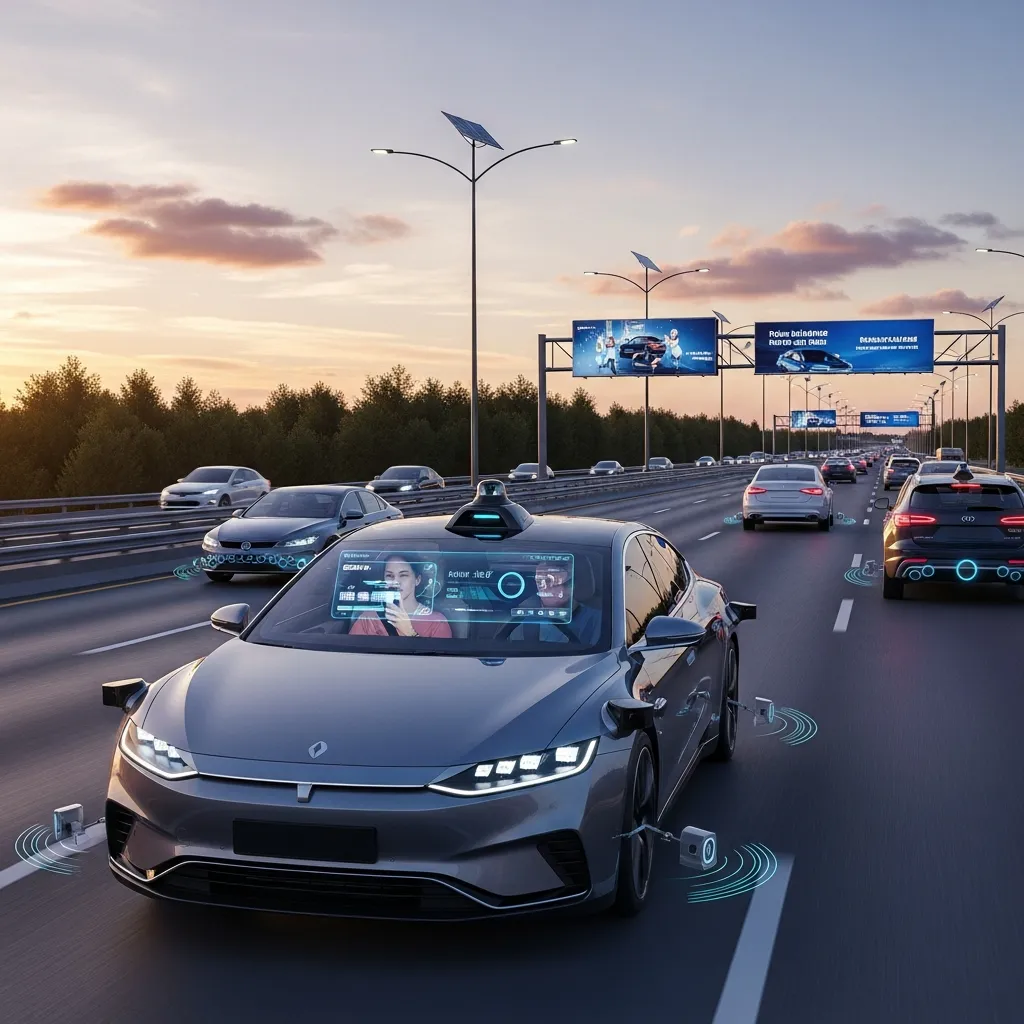
The Society of Automotive Engineers (SAE) defines six distinct levels of driving automation. Understanding these tiers helps consumers and developers categorize the capabilities of various autonomous vehicles.
Comparison Table: SAE Automation Levels
|
Level |
Title |
Description |
Human Intervention Required? |
|---|---|---|---|
|
Level 0 |
No Automation |
The human driver performs all driving tasks manually. |
Yes, entirely. |
|
Level 1 |
Driver Assistance |
The vehicle features a single automated system (e.g., cruise control). |
Yes, constantly. |
|
Level 2 |
Partial Automation |
The vehicle can control steering and acceleration simultaneously. |
Yes, monitor environment. |
|
Level 3 |
Conditional Automation |
The vehicle handles all driving tasks under specific conditions. |
Yes, upon system request. |
|
Level 4 |
High Automation |
The vehicle performs all driving tasks in certain environments (geofencing). |
No, within geofenced area. |
|
Level 5 |
Full Automation |
The vehicle performs all driving tasks under all conditions. |
No, never required. |
Mini-Conclusion: Tracking Industry Progress
Currently, most consumer autonomous vehicles operate at Level 2 or Level 3. Commercial robotaxis and advanced freight systems push the boundaries of Level 4. Reaching Level 5 remains the ultimate, highly complex goal for the artificial intelligence industry.
Navigating Safety and Regulation for Autonomous Vehicles
Safety remains the paramount concern for developers building autonomous vehicles. Unlike human drivers, an AI does not get distracted, fatigued, or impaired. However, algorithms must prove their reliability in millions of unpredictable edge cases before regulators permit widespread adoption.
Governments worldwide work tirelessly to draft comprehensive safety standards. Organizations like the National Highway Traffic Safety Administration (NHTSA) establish strict testing protocols for self-driving features. Regulators demand exhaustive documentation regarding data security, crash avoidance algorithms, and fail-safe redundancy systems.
Furthermore, integrating autonomous vehicles into existing smart city infrastructure requires massive coordination between automakers and municipal planners. Cities must standardize digital road signs and vehicle-to-everything (V2X) communication protocols. This connectivity allows autonomous vehicles to converse with traffic lights and other cars, drastically reducing collision risks and optimizing urban traffic flow.
Mini-Conclusion: Building Public Trust
Stringent regulatory frameworks protect consumers and establish necessary operational boundaries. When developers prioritize safety and work collaboratively with government agencies, they build the vital public trust needed to scale autonomous vehicles successfully.
Step-by-Step Guide: Implementing AI in Autonomous Fleets

Transitioning from traditional transportation to AI-driven fleets requires a highly structured, strategic approach. Follow this step-by-step methodology to successfully integrate autonomous vehicles into your organizational operations.
- Define Operational Design Domains (ODD): Determine exactly where and how your autonomous vehicles will operate. Specify weather conditions, geographic boundaries, and speed limits to constrain the AI’s operational scope safely.
- Upgrade Data Infrastructure: Autonomous vehicles generate terabytes of data daily. Invest in high-bandwidth edge computing and massive cloud storage solutions to process, store, and analyze this critical telemetry data.
- Deploy Advanced Simulation Testing: Before placing vehicles on public roads, run your machine learning models through billions of simulated miles. Test edge cases, severe weather, and unpredictable pedestrian behavior in a risk-free virtual environment.
- Implement Robust Cybersecurity: Autonomous vehicles represent massive digital targets. Encrypt all vehicle-to-cloud communications and establish strict intrusion detection systems to prevent malicious actors from compromising vehicle controls.
- Establish Redundant Fail-Safes: Design your systems so that hardware failures do not result in catastrophic accidents. Ensure your autonomous vehicles feature secondary braking systems, backup power supplies, and redundant computational modules.
- Train Human Oversight Teams: Even highly automated systems require monitoring. Train specialized remote operators who can intervene and safely guide autonomous vehicles if the AI encounters an unresolvable anomaly.
- Execute Phased Rollouts: Begin deployment in highly controlled, low-risk environments. Gradually expand your operational footprint as the AI gathers more real-world data and proves its absolute reliability.
Mini-Conclusion: Strategic Execution
Deploying self-driving fleets demands meticulous planning and rigorous testing. By following a structured implementation guide, mobility companies minimize risk and maximize the operational efficiency of their autonomous vehicles.
Common Mistakes to Avoid with Autonomous Vehicles
Even highly experienced engineering teams stumble when developing and deploying autonomous vehicles. Avoiding these frequent, costly errors protects your project timeline and preserves critical public safety.
- Underestimating Edge Cases: Many developers train their AI to handle normal driving perfectly but fail to account for bizarre, rare occurrences. Autonomous vehicles must know how to react to debris falling from a truck or erratic animal movements.
- Over-Relying on a Single Sensor: Trusting cameras alone or LiDAR alone creates massive blind spots. Failing to implement robust sensor fusion guarantees that your autonomous vehicles will fail when environmental conditions deteriorate.
- Neglecting Cybersecurity Protocols: Treating a self-driving car like a traditional vehicle leaves it completely vulnerable to hacking. You must secure every internal network and external API connection.
- Ignoring Regulatory Compliance Early On: Building an entire software architecture without consulting local transportation authorities forces massive, expensive redesigns later. Always align your development roadmap with upcoming government legislation.
- Failing to Manage Public Expectations: Overselling the capabilities of your autonomous vehicles creates severe backlash when the technology encounters natural limitations. Market your systems honestly and emphasize safety over immediate convenience.
Mini-Conclusion: Prioritizing Diligence
By proactively avoiding these common mistakes, developers protect their organizations from severe operational and public relations disasters. Diligent, careful engineering guarantees that autonomous vehicles remain both safe and genuinely beneficial to society.
Expert Insights and Pro Tips for Autonomous Vehicles
Industry leaders leverage specific strategies to accelerate the development of autonomous vehicles. Apply these advanced pro tips to elevate your artificial intelligence projects above the competition.
- Leverage Federated Learning: Expert developers use federated learning to train their AI models across decentralized fleets. This allows autonomous vehicles to share learned experiences without transferring raw, sensitive video data to a central server, preserving privacy and saving bandwidth.
- Invest heavily in V2X Technology: Do not rely solely on the vehicle’s onboard sensors. Equip your autonomous vehicles with Vehicle-to-Everything (V2X) communication. Allowing cars to share intent and telemetry data with one another dramatically improves intersection safety.
- Utilize Synthetic Data Generation: Gathering real-world data takes years. Accelerate your machine learning training by using generative AI to create photorealistic synthetic training data. This exposes your algorithms to dangerous scenarios safely.
- Integrate Advanced Fleet Management: Seamlessly connect your self-driving cars with modern fleet management solutions. Real-time dashboard analytics allow dispatchers to monitor battery health, optimize routing, and schedule predictive maintenance automatically.
Mini-Conclusion: Elevating Engineering Standards
Implementing these advanced expert tips transitions your team from basic development to true technical mastery. Exceptional engineering practices secure long-term product viability and massive market respect within the autonomous mobility sector.
The Impact on Urban Mobility and Logistics
Autonomous vehicles do not simply change how we drive; they completely restructure our urban environments and global supply chains. As cities embrace smart infrastructure, the integration of autonomous vehicles offers profound societal benefits.
In urban centers, robotaxis provide on-demand, equitable transportation, reducing the need for personal car ownership. This shift drastically decreases traffic congestion and eliminates the need for sprawling parking lots, allowing cities to reclaim space for parks and pedestrian walkways. Furthermore, electric autonomous vehicles significantly reduce greenhouse gas emissions, actively combating climate change.
Within the logistics sector, autonomous trucking revolutionizes freight transport. Human drivers face strict hours-of-service limitations due to fatigue. Autonomous vehicles operate continuously, pausing only to refuel or recharge. This uninterrupted operation slashes delivery times and drastically lowers shipping costs. By integrating AI trucks with automated warehouses and machine learning systems, supply chains achieve unprecedented levels of efficiency and resilience.
Mini-Conclusion: Redefining Global Infrastructure
The deployment of self-driving technology extends far beyond automotive engineering. Autonomous vehicles fundamentally redefine urban planning, environmental sustainability, and global economic logistics for the better.
Future Trends Shaping Autonomous Vehicles
As we look toward the horizon, autonomous vehicles will only grow in sophistication. The rapid proliferation of 5G and future 6G networks will enable instant, high-bandwidth communication between vehicles and cloud infrastructure. This connectivity allows for swarm intelligence, where massive fleets of autonomous vehicles navigate cities collectively like a school of fish.
Furthermore, we will see significant advancements in artificial general intelligence (AGI) applied to driving software. Future autonomous vehicles will possess deep contextual reasoning, allowing them to understand human intent through subtle cues, such as a pedestrian making eye contact before crossing the street. The industry moves aggressively toward a future where automated mobility is the universal standard.
Mini-Conclusion: Preparing for Tomorrow
The continuous evolution of artificial intelligence guarantees that self-driving cars will dominate future transportation. Organizations that invest heavily in autonomous vehicles today will ultimately define the ultimate standard for smart global mobility tomorrow.
Conclusion
Artificial intelligence undeniably dictates the future of transportation. By embracing advanced sensor integration and rigorous safety testing, organizations can successfully deploy autonomous vehicles. Prepare your infrastructure today, invest in robust data frameworks, and join the revolution shaping the next generation of smart, sustainable global mobility.
Frequently Asked Questions
What are autonomous vehicles?
Autonomous vehicles use artificial intelligence, deep neural networks, and sophisticated sensors to navigate and drive without human intervention. They interpret their environment in real time to execute safe, efficient driving maneuvers.
How do autonomous vehicles see the road?
They rely on a combination of high-definition cameras, LiDAR, and radar. These sensors gather environmental data, which the vehicle’s artificial intelligence processes through computer vision and sensor fusion to create a 3D map of the surroundings.
What is the difference between Level 2 and Level 4 automation?
Level 2 provides partial automation, requiring the human driver to monitor the road and remain ready to take control. Level 4 offers high automation, allowing the vehicle to handle all driving tasks independently within a specific geofenced area without human oversight.
Are autonomous vehicles safe?
Developers design these vehicles to be significantly safer than human drivers. They do not get distracted, text, or drive impaired. However, they undergo millions of miles of rigorous simulated and real-world testing to ensure they handle unpredictable edge cases safely before public release.
Why is LiDAR important for self-driving cars?
LiDAR uses laser pulses to measure exact distances, creating highly precise, 3D topographical maps of the vehicle’s environment. Unlike cameras, LiDAR operates flawlessly in total darkness, providing critical redundancy for safe navigation.
How will autonomous vehicles affect traffic congestion?
By utilizing V2X communication, self-driving cars coordinate their speeds and braking with other vehicles and smart traffic lights. This eliminates the “phantom traffic jams” caused by human reaction times, streamlining urban traffic flow significantly.
Can autonomous vehicles operate in bad weather?
Heavy rain and snow pose challenges for cameras and LiDAR. However, through advanced sensor fusion, vehicles automatically shift their reliance to radar systems, which penetrate adverse weather conditions effectively to maintain safe navigation.
How do autonomous vehicles impact the logistics industry?
They revolutionize logistics by enabling 24/7 freight transportation. Without human fatigue limitations, autonomous trucks deliver goods faster and cheaper, optimizing global supply chains and integrating seamlessly with automated warehouse infrastructures.
What role does 5G play in autonomous driving?
5G networks provide the ultra-low latency and massive bandwidth required for vehicles to communicate instantly with cloud servers and other cars. This rapid data exchange is vital for real-time hazard warnings and cooperative swarm navigation.
When will fully autonomous vehicles (Level 5) be available everywhere?
While Level 4 vehicles currently operate in specific cities, reaching true Level 5 automation—driving anywhere, under any condition, without a steering wheel—remains a complex challenge. Industry experts predict widespread Level 5 adoption will occur gradually over the next decade as AI and infrastructure evolve.


Leave a Reply